



 Nassau



Please wait
Costa Rica liveaboards, boat by boat.
Cocos Island is rightly considered one of the world’s finest places for big fish encounters and liveaboard diving holidays, as the planet’s largest uninhabited island is surrounded by a wealth of glor…
Why dive Costa Rica by boat
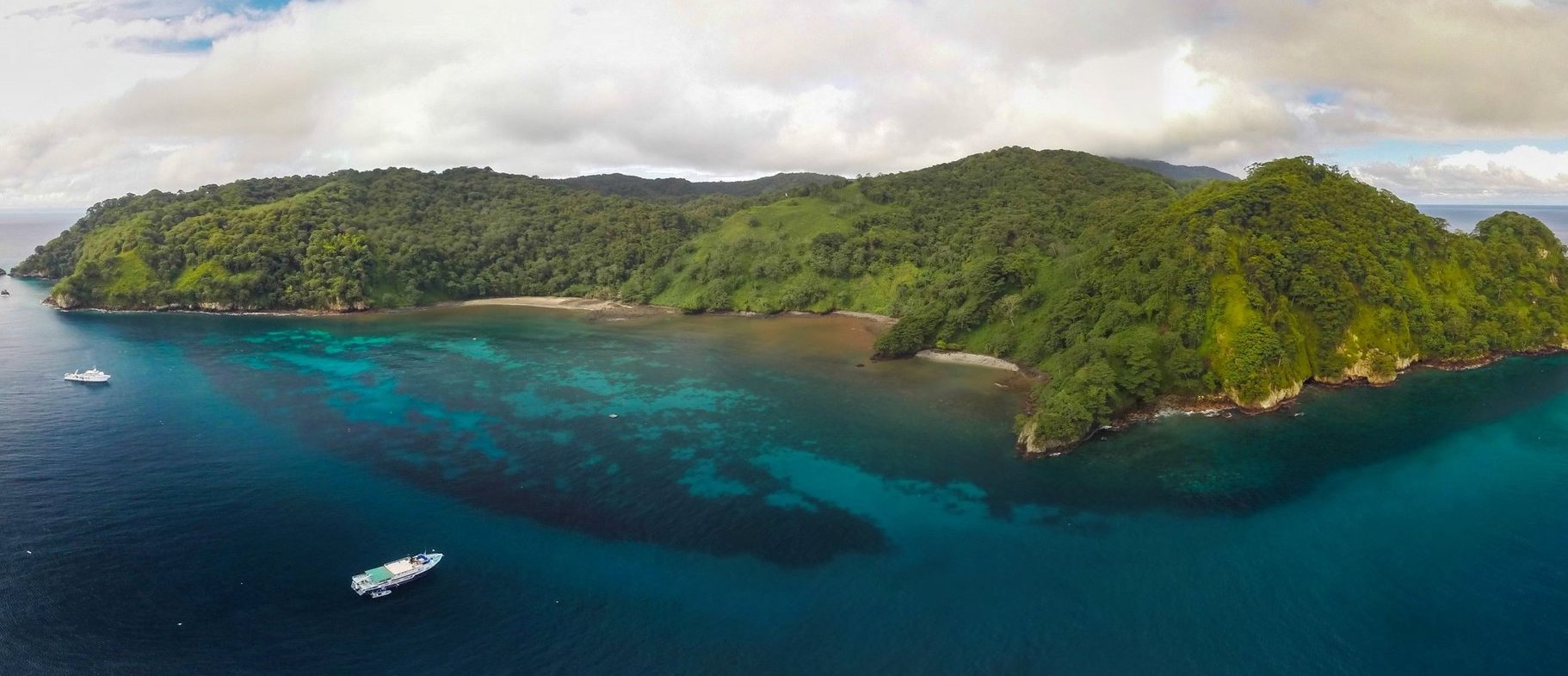
Cocos Island is rightly considered one of the world’s finest places for big fish encounters and liveaboard diving holidays, as the planet’s largest uninhabited island is surrounded by a wealth of glorious marine life and top dive sites – enough to make the heavily protected isles one of the 7 natural wonders of the world, as voted by New7 Wonders of Nature.
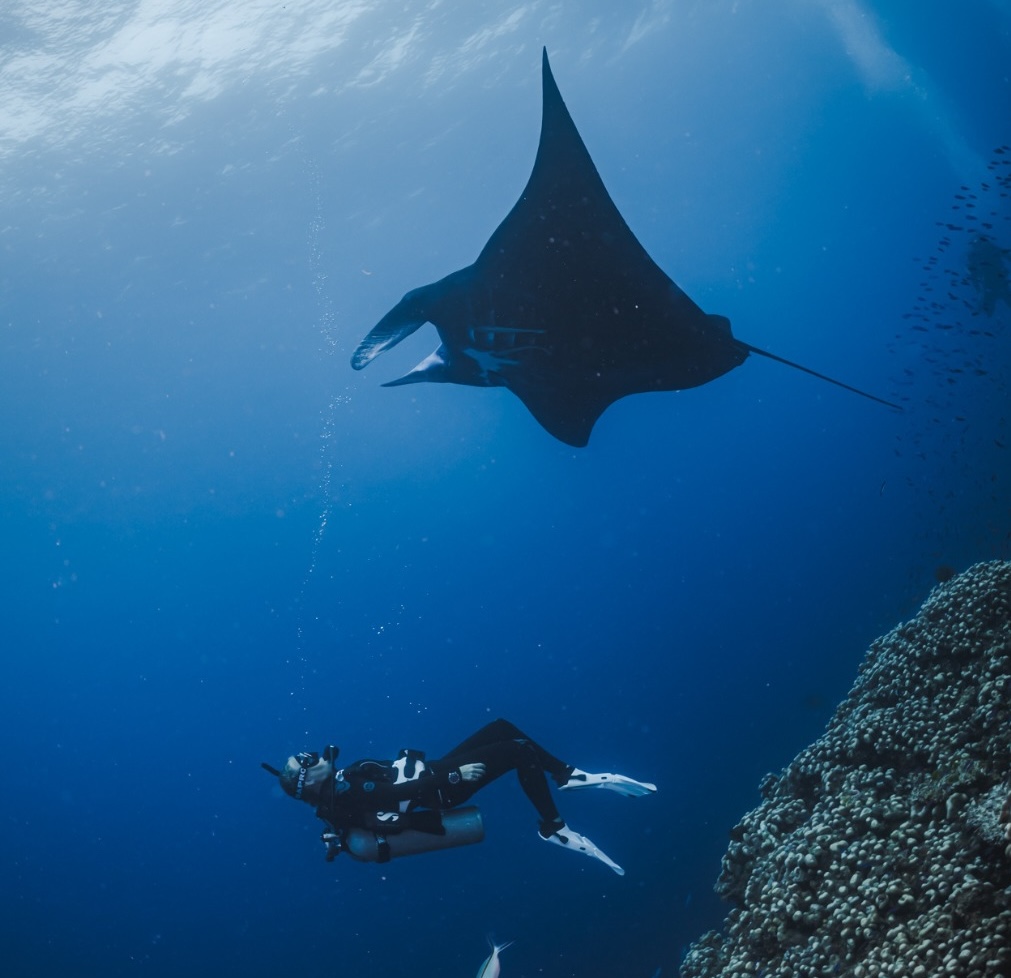
With 25ft of rainfall in just 6 months on the life-packed island, the bright vegetation and habitual haven of the 9m² Cocos Island ensure there’s always an incredible array of creatures in and around the land and waters of the place that so heavily inspired Robinson Crusoe and Jurassic Park. From the giant whale sharks, dolphins and turtles to the silver tip sharks, mantas and other whales; Cocos Island harbours a magnificently diverse range of marine life - and in the most unspoilt and visually spectacular of settings.
Lying around 340miles South West of Costa Rica in the Pacific Ocean, the National Park is exclusively restrictive with its visitors – meaning the only way to visit the lush waters is with one of the exciting liveaboards available here. This is of course no bad thing, as the extended time in the water allows divers of an experienced standard to delve much deeper and discover much more about the breath-taking scenery of the place so drenched in pirate history and folklore, and of course its unique inhabitants - making for the most fascinating of diving expeditions.
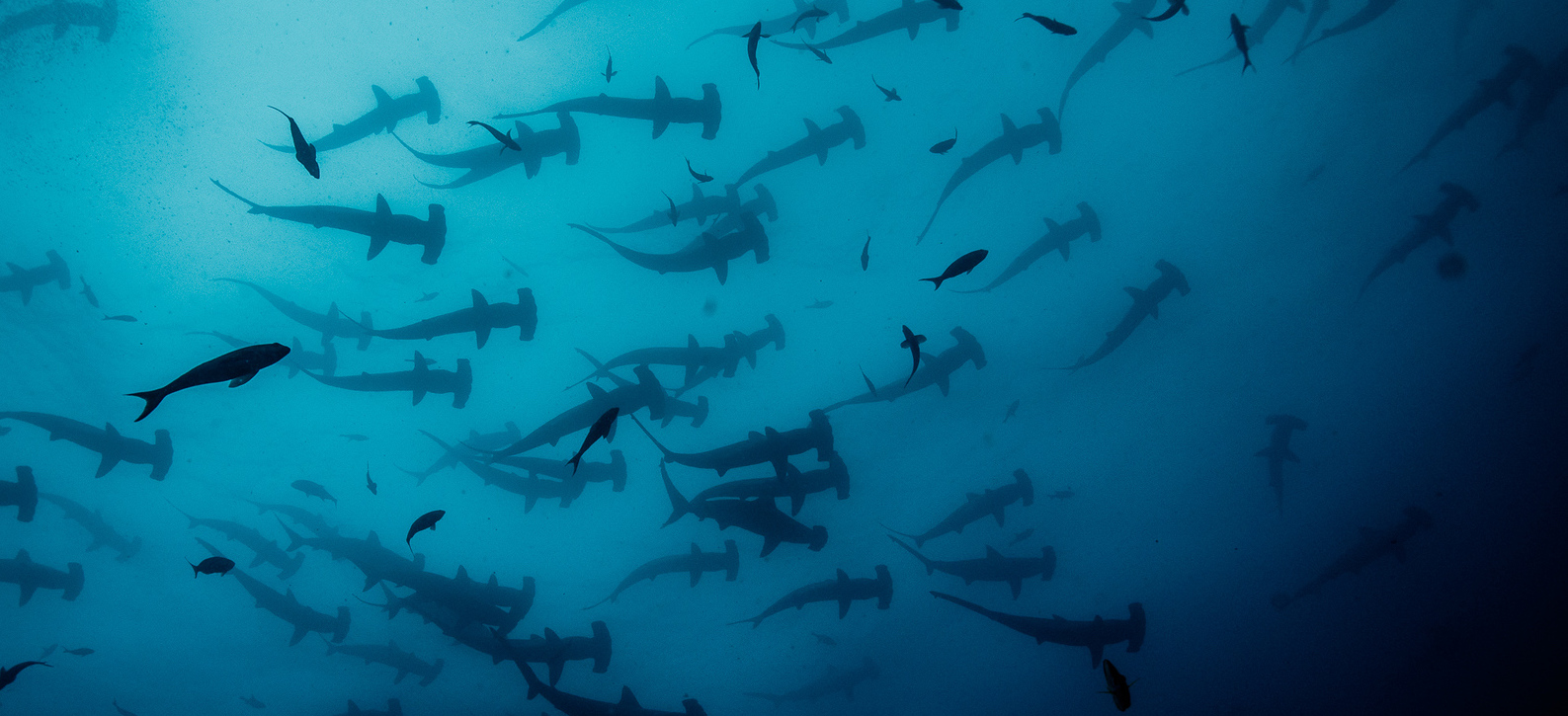
Voted one of the Top Ten Dive Sites in the World by PADI, Cocos Island comes fully loaded with all the credentials and diving essentials to ensure your liveaboard diving holiday will be truly unforgettable. From swimming with the world’s largest schools of hammerheads to studying the rich coral reef and volcanic tunnels encapsulating the World Heritage Site – even just few days of diving in the Cocos will be one of the best things you ever decide to do.
A Costa Rica Liveaboard are not only the best way to reach Cocos Island Liveaboards, it is the only way to get close to the protected isles due to the strict laws in place and distnace involved. With a liveaboard to Cocos Island, you are afforded the freedom of choice to anchor up and get diving in the recommended hot spots, massively increasing your chances of seeing the creatures you’d most like to swim with and study up close.
The social aspect of liveaboards combined with the greatly extended time in the water ensure divers can get a much more detailed and studied understanding of Costa Rica’s Cocos Island – sharing the awesome discoveries of the day time activities with your fellow liveaboard divers over dinner and a few drinks in the evening. With much greater scope for dive sites and diving time afforded, you’ll have plenty to discuss and talk about in between dives!
Liveaboards in Costa Rica are predominantly there for the diving at Cocos Island and Malpelo Island. Located around 350 miles off the Pacific coast of Costa Rica liveaboards operate from the port at Puntarenas, and the crossing to Cocos Island takes between 30-35 hours. For this reason itineraries are at least 8 nights onboard and normaly 10 or 11 nights.
More recently 7 night itineraries have been developed to dive the El Caño Island Marine Reserve
Due to strong currents, Cocos is recommended for advanced divers only. The dives sites are mainly characterized by wall diving which house a variety of small creatures living in the holes and caves, as well as large schools of pelagics swimming by. There are a number of rocky pinnacles which are beacons for big action and large schools of fish. The pelagic sharks such as tiger sharks, Galapagos sharks, and whale sharks are also attracted to the remote pinnacles.
Some of our favourite sites around Coco Island are:
Manuelita Coral Garden you frequently get Tiger Sharks, hammerheads and large groups of whitetips hunting during the daytime.
Manuelita Outside is a good dive site for schooling hammerheads, dolphins, and spotted eagle rays.
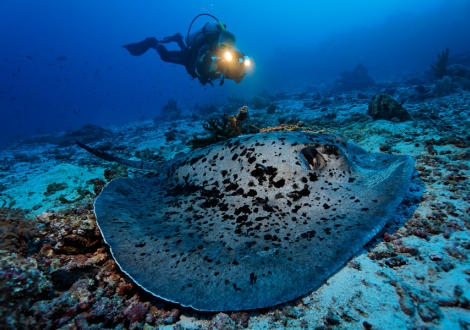
Big Dos Amigos and Small Dos Amigos gives divers a chance to see marble rays, Mobula rays and white tips. You can also see silky sharks, whale sharks, and mating white tip sharks.
Bait Ball, where you can see sharks and dolphins feeding on large schools of fast swimming fish.The Cocos Island is an oceanic island of both volcanic and tectonic origin, and forms the only emergent island of the Cocos Plate; one of the smaller tectonic plates. Composed primarily of Basalt, the cooling lava is well over two million years old and houses huge schools of a spectacularly diverse range of marine life, both in seascape and the surrounding waters.
Whilst not the world’s prettiest coral reef, the volcanic tunnels, caves, massifs and deep waters of Cocos Island are very colourful and are host to more than 30 species of coral, 60 species of crustacean, 600 species of mollusc and well over 300 species of fish.
In amongst these huge schools of marine life variations are vast populations of humpback whales, sea lions, hammerhead sharks, scalloped hammerhead shark, white & silver tip reef sharks, whale shark, rays, dolphins, bottlenose dolphins and mantas.
On top of all the huge residents swimming the Coco waters, the incredible schools of fish are by no means second fiddle to the larger life. Giant collections of yellowfin tuna, barracudas, jacks, sail fish, moray eels, manta rays, lobsters and giant turtles are all roaming the waters in great quantities – to name but a few. With such highly populated waters and such stunning landscapes & seascapes – it’s no wonder PADI & Natural World consider the Cocos one of the top 10 dive sites, and one of the 7 Natural Wonders of the world respectively.
During the months with cooler waters, the larger life is attracted - including the female hammerheads that come looking for cleansing of their sting ray barbs, through the symbiotic relationship shared with the parasitic copepods; providing a nutritious meal in return for removing the barbs and the discomfort of the wounds built up… which of course makes great viewing for divers at a distance.
‘At a distance’ is your best chance of seeing the sharks in Coco waters, as the naturally shy creatures are elusive and scared away easily. That’s why we recommend a re-breather in this situation, as no matter how subtle you attempt to be, the bubbles will almost certainly restrict how close you can get to them. Although this may mean you’re the last to have a cold beer planted in your hands at the end of the day (due to packing away), it does mean you have a much greater chance of seeing a more plentiful offering of the wonderful marine life creatures around the island.
The rainy season of Cocos Island is between June and November. During these months the water temperature will drop slightly. During these cooler months, the visibility is a little reduced but there is little if any wind – attracting the biggest of marine life creatures, and in turn - the most divers! September and December provide the highest chance of seeing the majestic whale shark, particularly during the full moon periods. May and November is generally thought to be the best time to dive Cocos Island and Sharks are there in numbers.
Wind and waves make mid September to October a less comfortable time to dive Cocos Island, and many boats are dry docked. It is said that during El Nino years larger marine life, such as sharks go deeper and less easily seen.
Q: What is the best way to dive Cocos?
Liveaboards are the only way of diving around Cocos Island since there is not accommodation on land. It takes about 30 hours from the mainland to reach the dive sites of the Cocos Island.
Q: Where is the best scuba diving in Cocos Island?
Because Cocos is not that large of an area, any of the 20 dive sites around the island will give you opportunities for some of the world's best diving.
Q: What is the water temperature?
Temperatures may vary from site to site and thermoclines may drastically change temperatures, but generally speaking it is 25° - 28°C between November and May, and 24° - 27°C from June to December.
Q: What scuba equipment should I bring?
Most divers bring a 5mm long wetsuit, hood, and boots. Some people need thicker wetsuits, so it is best to plan on cold temperatures. It is always smart to bring spare equipment as well as an SMB, whistle, or mirror to signal the boat from the surface. Reef hooks are not necessary, but they are a good idea. Bring fins that allow you to cut through strong currents and keep up with the fast-swimming sharks that you are sure to see there.
Q: Is Cocos suitable for beginner divers?
Cocos is only appropriate for experienced, fit divers. Strong currents, remote dive sites and many close encounters with sharks are the main reasons for this. Additionally, a 30 hour crossing by boat and heavy rains at times make Cocos only suitable for seasoned divers.
Q: What is the sea crossing like?
The crossing from the mainland to the first dive site is between 30 - 35 hours. We recommend bringing motion sickness tablets, plenty of good music and books to keep yourself entertained, and of course, a good dive buddy to pass the time with.
The right boat matters
Tell us your certification level, your dates and what you want to see — we'll recommend the right itinerary, the right boat and the right cabin, honestly, from experience.
Pick your boat, pick your week
Every departure shows live cabin availability. Cabins go fast in high season — see a week you like? Call us and we'll hold the best one for you.
 📷 View gallery
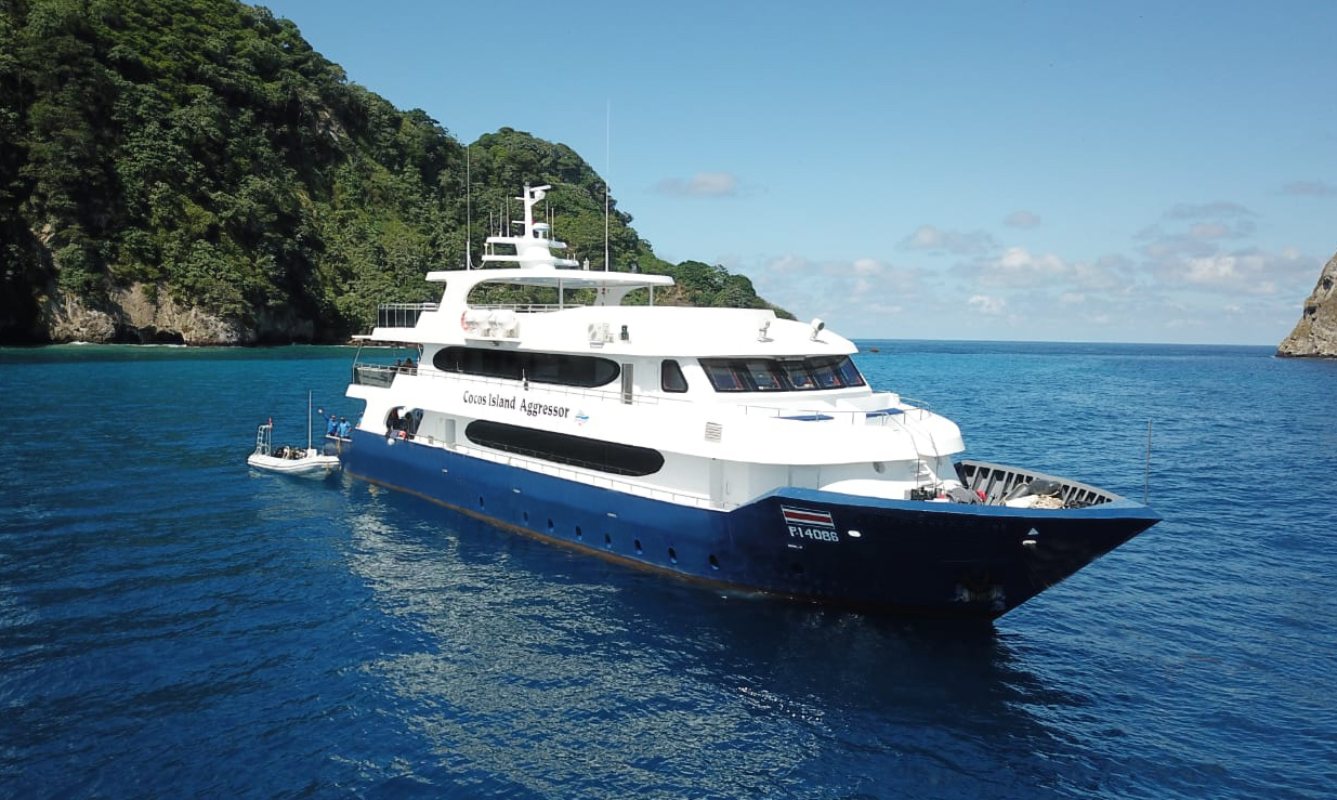
Cocos Aggressor
- Diving with hammerheads, eagle rays, and whales
- 4 master staterooms on the upper deck
- Complimentary fruit juices, soft drinks, water, iced tea, coffee, and a limited selection of local beer and wine
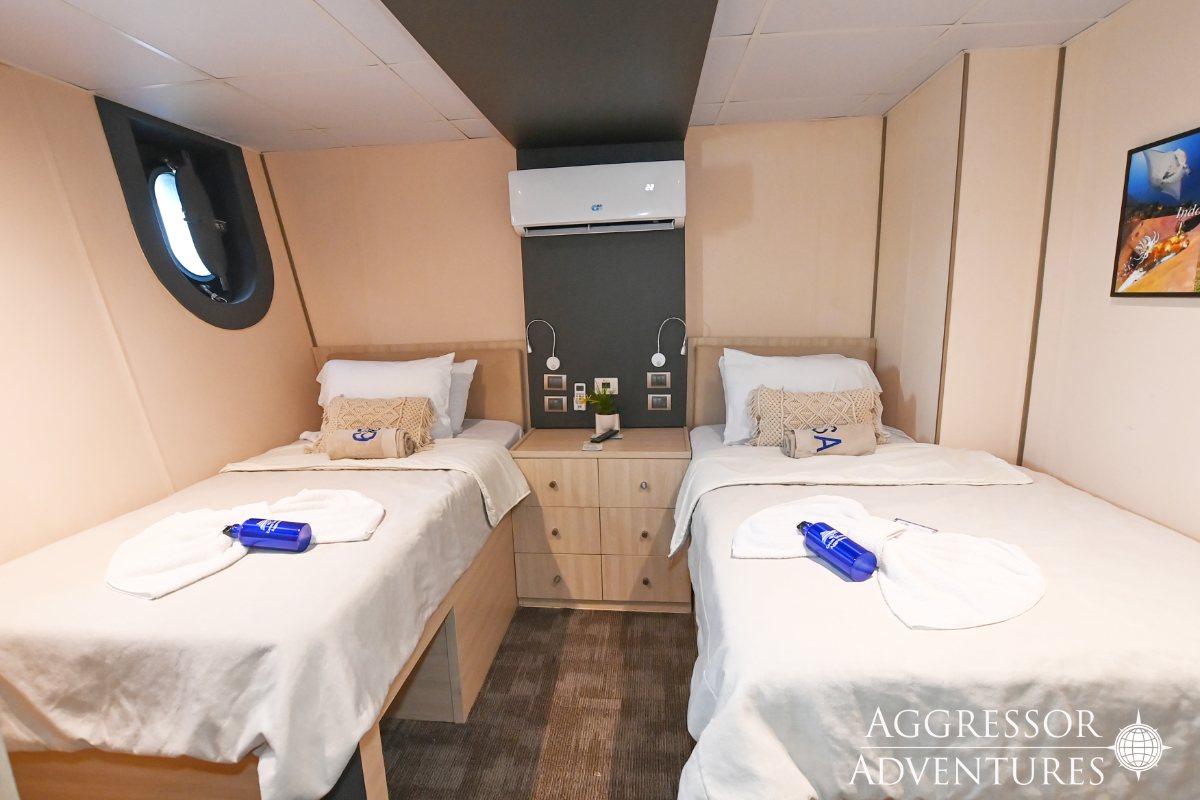
Deluxe Stateroom
Included
- All diving — tanks, weights & air
- 100% financial protection via our Travel Trust Association membership
- ATOL holiday protection when we include a flight with your holiday
Not included
- International flights — we can add these to your trip
- Hotel stays before or after your trip — we have exceptional prices at the best hotels in the region if you want to extend your trip
Deluxe Stateroom
Included
- All diving — tanks, weights & air
- 100% financial protection via our Travel Trust Association membership
- ATOL holiday protection when we include a flight with your holiday
Not included
- International flights — we can add these to your trip
- Hotel stays before or after your trip — we have exceptional prices at the best hotels in the region if you want to extend your trip
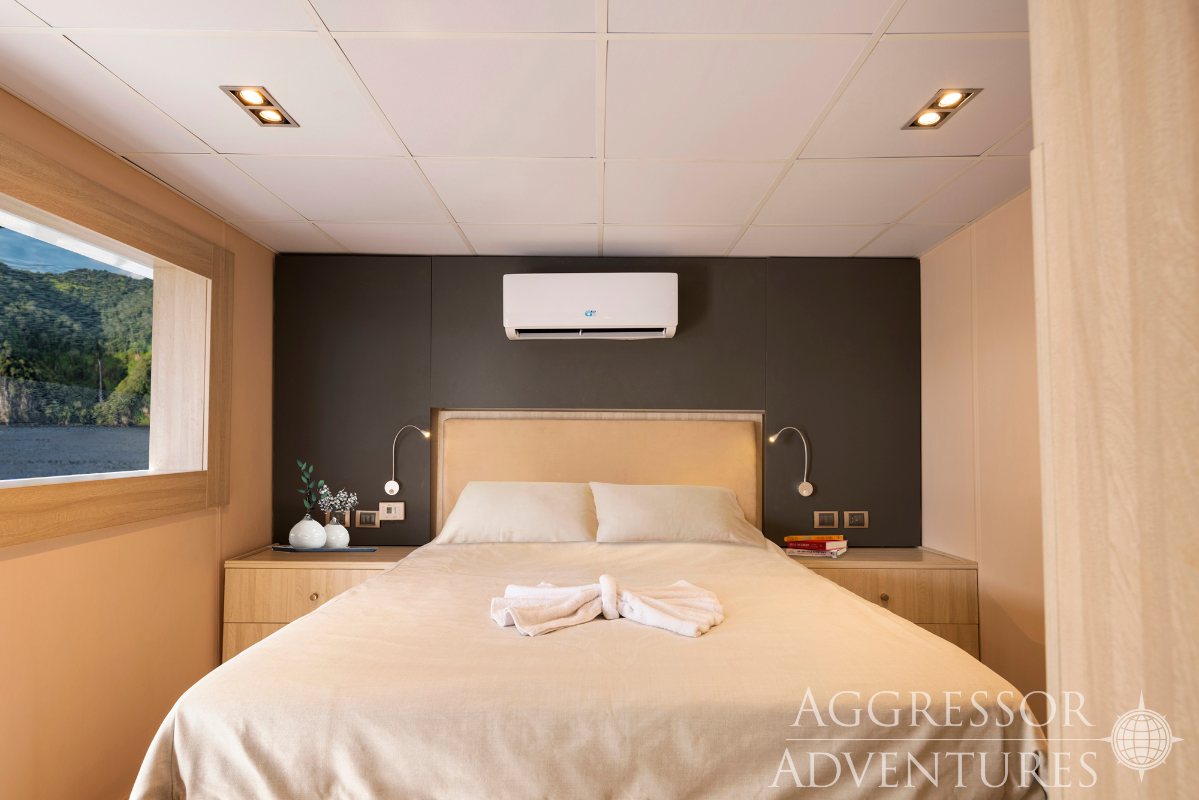
Master Stateroom
Included
- All diving — tanks, weights & air
- 100% financial protection via our Travel Trust Association membership
- ATOL holiday protection when we include a flight with your holiday
Not included
- International flights — we can add these to your trip
- Hotel stays before or after your trip — we have exceptional prices at the best hotels in the region if you want to extend your trip
Deluxe Stateroom
Master Stateroom

Single
Included
- All diving — tanks, weights & air
- 100% financial protection via our Travel Trust Association membership
- ATOL holiday protection when we include a flight with your holiday
Not included
- International flights — we can add these to your trip
- Hotel stays before or after your trip — we have exceptional prices at the best hotels in the region if you want to extend your trip
Deluxe Stateroom
Master Stateroom
Included
- All diving — tanks, weights & air
- 100% financial protection via our Travel Trust Association membership
- ATOL holiday protection when we include a flight with your holiday
Not included
- International flights — we can add these to your trip
- Hotel stays before or after your trip — we have exceptional prices at the best hotels in the region if you want to extend your trip
 📷 View gallery
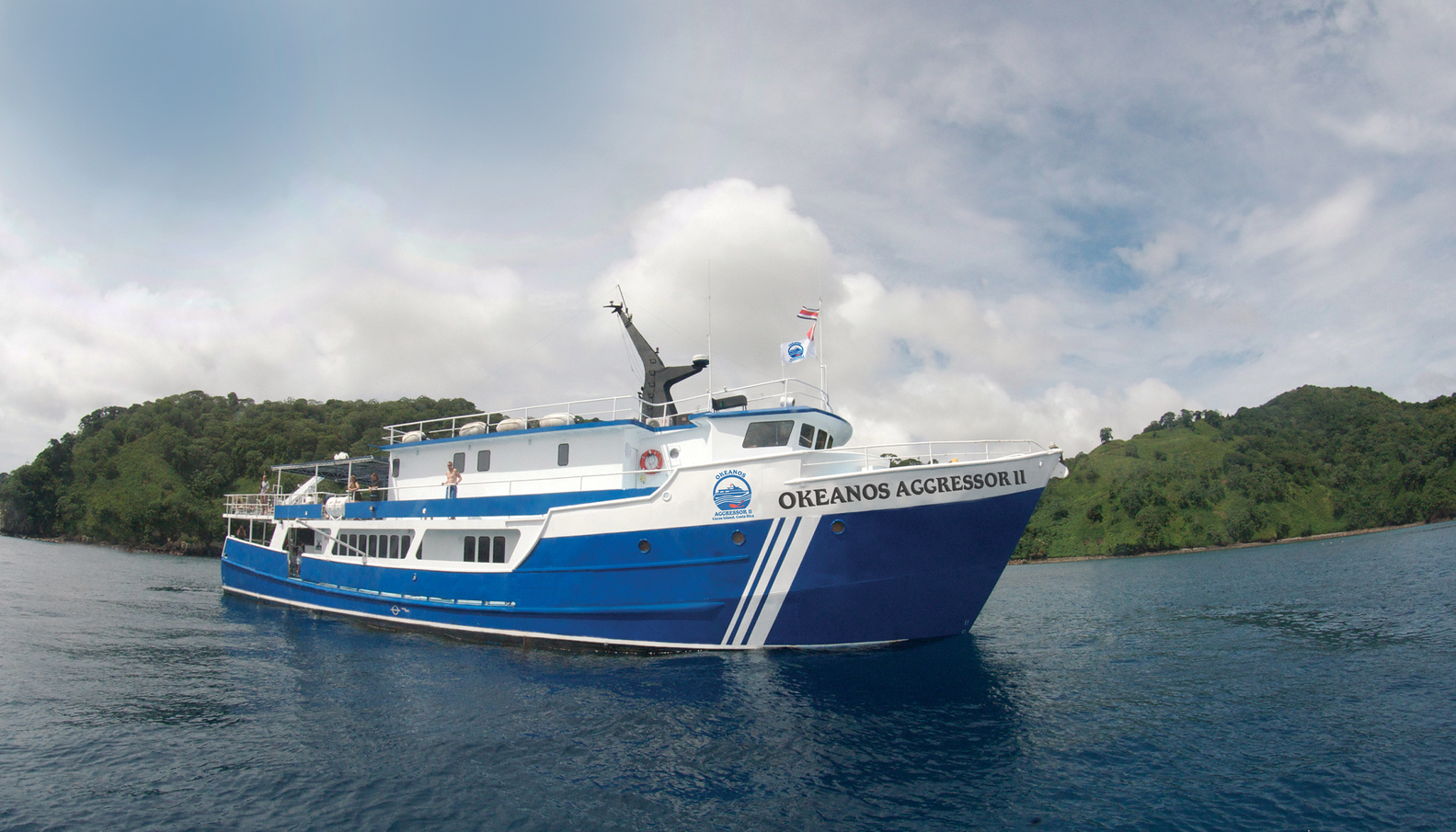
Okeanos Aggressor II
- Ultra professional operation since 1988
- 9 deluxe staterooms, 1 master deluxe stateroom and 2 suites
- Regular sightings of schooling hammerheads, countless white-tip sharks, manta rays, tuna, and whale sharks
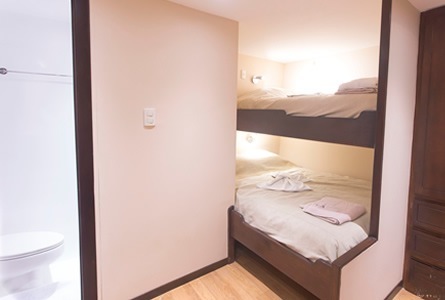
Deluxe Stateroom
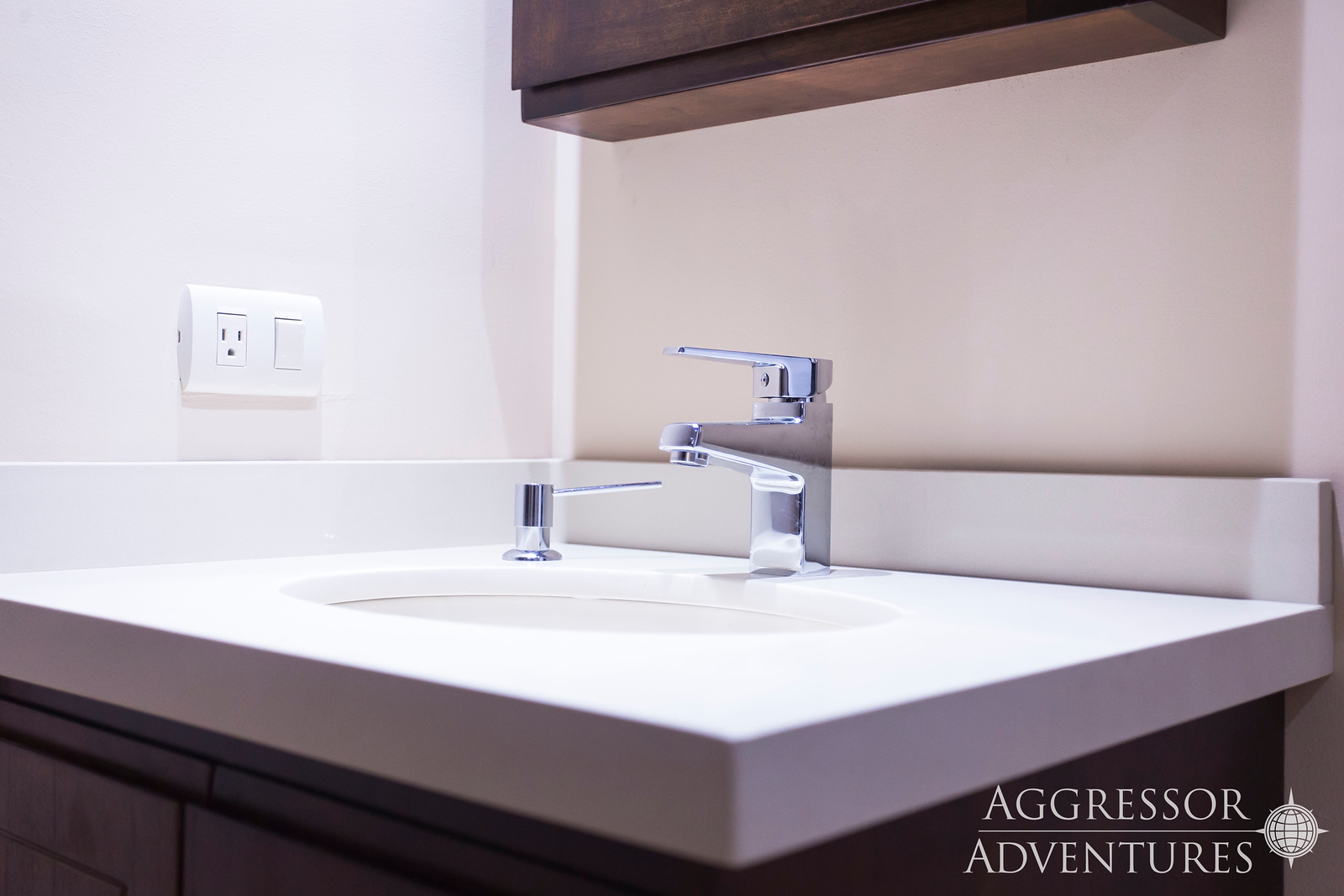
Master Stateroom
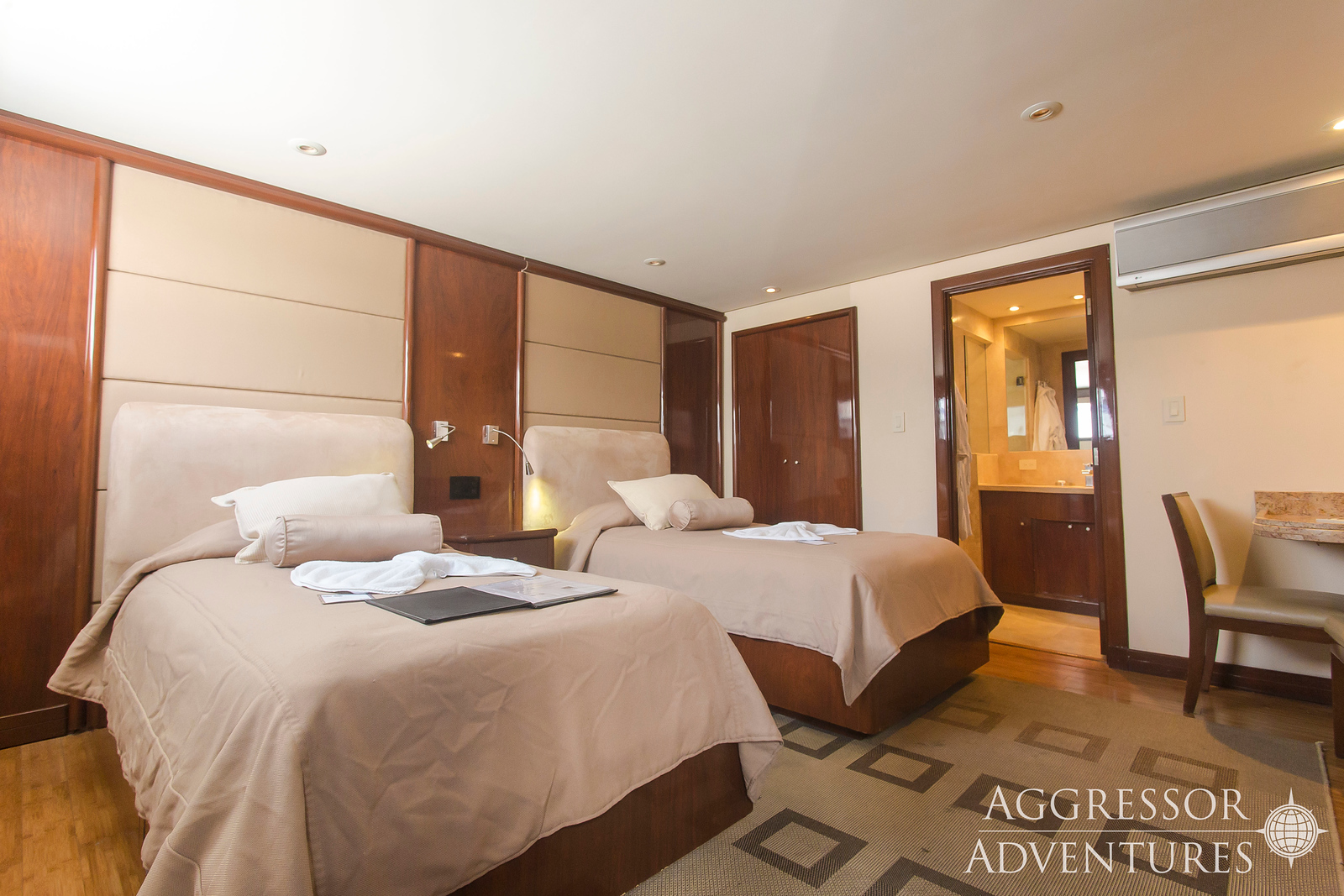
Suite
Included
- All diving — tanks, weights & air
- 100% financial protection via our Travel Trust Association membership
- ATOL holiday protection when we include a flight with your holiday
Not included
- International flights — we can add these to your trip
- Hotel stays before or after your trip — we have exceptional prices at the best hotels in the region if you want to extend your trip
Deluxe Stateroom
Included
- All diving — tanks, weights & air
- 100% financial protection via our Travel Trust Association membership
- ATOL holiday protection when we include a flight with your holiday
Not included
- International flights — we can add these to your trip
- Hotel stays before or after your trip — we have exceptional prices at the best hotels in the region if you want to extend your trip
Deluxe Stateroom
Included
- All diving — tanks, weights & air
- 100% financial protection via our Travel Trust Association membership
- ATOL holiday protection when we include a flight with your holiday
Not included
- International flights — we can add these to your trip
- Hotel stays before or after your trip — we have exceptional prices at the best hotels in the region if you want to extend your trip
Deluxe Stateroom
Included
- All diving — tanks, weights & air
- 100% financial protection via our Travel Trust Association membership
- ATOL holiday protection when we include a flight with your holiday
Not included
- International flights — we can add these to your trip
- Hotel stays before or after your trip — we have exceptional prices at the best hotels in the region if you want to extend your trip
Deluxe Stateroom
Suite
Included
- All diving — tanks, weights & air
- 100% financial protection via our Travel Trust Association membership
- ATOL holiday protection when we include a flight with your holiday
Not included
- International flights — we can add these to your trip
- Hotel stays before or after your trip — we have exceptional prices at the best hotels in the region if you want to extend your trip
Not sure which boat or itinerary?
We've dived these boats and routes ourselves — one call and we'll match you to the right week, the right cabin and today's best price.
Surface intervals, done properly
You've flown all this way — combine your liveaboard with the sights on land or a relaxed land-based stay.
Talk to a Dive travel expert — not a call centre.
Tell us your dates, your level and what a perfect week looks like. We'll come back with a shortlist of spots with the right conditions and the right hotel — usually within one working day.
Book your free consultation
Mon–Fri 9am–6pm