Red Sea liveaboards run four broad itineraries, and which one suits you depends mostly on how many dives you have logged. The northern wrecks and reefs route is the right first liveaboard for almost everyone. Brothers, Daedalus and Elphinstone is the offshore route, and operators normally ask for 50 dives. The deep south adds long crossings.
Egyptian boats sell their weeks by name, and the names are not standardised. One operator’s Northern Wrecks and Reefs is another’s Best of Wrecks; Simply the Best and BDE mean the same three offshore pinnacles. Underneath the wording there are four route families, and logged dives decide between them far more than budget does.
What the names on a liveaboard schedule actually mean
An itinerary is defined by two things: which reefs a boat can reach from its home port inside a week, and which of those it may visit that month. That is why the same vessel runs one route in January and another in June. A full season of Red Sea liveaboards is four patterns under different names, leaving from four ports.
Almost every trip is seven nights. Three or four dives a day is standard, so a week gives you 17 to 20 dives, and boats stop diving around 24 hours before your flight home.
| Route | Departure port | What operators ask for | Current and conditions | When it runs |
|---|---|---|---|---|
| Northern wrecks and reefs | Hurghada | Around 20–25 dives; Advanced for the deeper wrecks | Mild to moderate; sheltered overnight moorings | All year, wind permitting |
| North and Tiran (the simple route) | Sharm el Sheikh or Hurghada | Open Water and roughly 15–20 dives | The gentlest of the four; short crossings | All year |
| Brothers, Daedalus, Elphinstone | Hurghada or Port Ghalib | Typically 50 dives, Advanced, Nitrox, own SMB and torch | Strong, unpredictable; negative entries, drift pickups | Roughly March to early December; winter wind thins the schedule |
| Deep south and St John’s | Port Ghalib or Hamata | Usually around 30 dives and Advanced; Nitrox strongly advised | Moderate inshore; exposed offshore pinnacles | Roughly April to November; spring and autumn settle best |
The northern wrecks and reefs: Thistlegorm and Abu Nuhas
This is the route most people mean when they say they want to do the Red Sea by boat, and the one we book most. Boats leave Hurghada marina and work the Strait of Gubal. The SS Thistlegorm is the centrepiece: a British freighter bombed in October 1941, upright with her deck at about 16 m and the seabed at roughly 32 m, still holding Bedford trucks, BSA motorcycles and two locomotives thrown clear of the hull. A boat moors on her overnight and dives her three or four times.
Abu Nuhas is the other reason to book this route. Four ships lie along its northern side (the Giannis D, the Carnatic, the Chrisoula K and the Kimon M) and none is deep. Most sit between about 5 m and 27 m, so you dive them properly rather than glance at them while a computer counts down. The Rosalie Moller off Gubal is the exception: she stands from around 30 m to 50 m, a real deep dive most boats treat as optional.
Northern weeks usually finish at Ras Mohammed and the Strait of Tiran, where this route overlaps with the day-boat diving out of Sharm el Sheikh. If you have not yet settled the boat-versus-hotel question, our comparison of the Red Sea dive bases covers that side of it.
Brothers, Daedalus and Elphinstone: the offshore route
BDE is a different kind of week. The Brothers are two small islands roughly 65 km off El Quseir. Daedalus lies further out again, somewhere near 90 km offshore, with a lighthouse on it and nothing else. Elphinstone is the inshore one, about 12 km off the coast north of Marsa Alam. All three are isolated pinnacles standing in open water, which is why they hold what they hold.
Big Brother has the wrecks, the Numidia and the Aida, both lying down a steep wall. Small Brother has the fish: grey reef sharks over the plateau and threshers that come up to the cleaning stations early. Daedalus gives you Anemone City, the clownfish wall on the western side, and, from late spring into high summer, a chance of schooling hammerheads off the north point. Elphinstone is a ridge about 350 m long with a plateau at each end; the northern one starts around 27 m and the southern is deeper, with an arch below it well past recreational depth.
Operators are not being awkward when they ask for 50 logged dives and an Advanced certification here. Entries are often negative, off a moving RIB into blue water; the current can put you several hundred metres from where you went in; and there is no shallow reef to shelter behind when it turns. Boats built for this run — Emperor Elite is a fair example — carry the tenders and the crew to collect divers spread over a wide piece of sea.
The deep south, Fury Shoals and St John’s
South of Marsa Alam the coast empties out and the reefs change character. Fury Shoals is a broad system of coral gardens, swim-throughs and small wrecks — Abu Galawa, Sha’ab Claudia, and Sataya, where a resident group of spinner dolphins spends the day in the lagoon. St John’s lies further south again, near the Sudanese border, and has the best coral architecture in Egypt: caves and chimneys at Umm Kharerim, and offshore pinnacles at Habili Ali and Habili Gafaar holding grey reefs.
The catch is the steaming. From Port Ghalib, reaching St John’s takes most of a night each way, and that is time you are not diving. Boats leaving Hamata, about two and a half hours south of Marsa Alam airport by road, cut the crossing substantially, and some operators sell 10-night versions so the reefs get more of the week. Vessels such as Grand Sea Serpent work this end of the coast. If you would rather sleep ashore, our piece on the southern Red Sea from Marsa Alam sets out which of these reefs a hotel week reaches.
Which route for a first liveaboard
The northern one. Not because the offshore reefs are overrated (they are the best diving in the country) but because a first liveaboard has a learning curve of its own, and it is easier to climb on sheltered moorings. You are diving three or four times a day across five or six days, kitting up on a moving deck, and finding out how your ears cope with that rhythm.
There is a plain arithmetic argument too. Divers who reach the Brothers with 55 logged dives, most of them from a resort day boat two years ago, spend three dives getting their weighting and their buoyancy back. On a northern route that costs nothing. On an offshore week it costs a third of the trip, on the sites you paid to get to. A northern week on a boat such as Red Sea Aggressor II, then BDE the next year, gets you more out of both.
When to go, and when the offshore islands are out of reach
Water in the north runs around 21–23°C in February and March and reaches 28–29°C from August into early October. The south sits two or three degrees warmer through the winter. A 5 mm suit covers the year for most people; add a hood and a vest for a winter week, when four dives a day means you never quite dry out. The deck at half past six on a January morning is cold.
Season matters far more offshore than in the north, though not for the reason the forums give. There is no annual closed season on the offshore islands: the Brothers, Daedalus, Rocky Island and Zabargad are diveable in principle all year, and operators publish departures from January through to December. What thins the offshore schedule between December and February is wind rather than a rule, so boats sell northern itineraries instead for those weeks. Access can be suspended at short notice, mind — the Egyptian authorities shut the Brothers from late December 2018 until the March, after a run of oceanic whitetip bites — and that kind of decision arrives without much warning. Late spring into high summer is the hammerhead window at Daedalus; October to December, peaking in November, is when oceanic whitetips appear at Elphinstone and the Brothers. Neither is a guarantee, and any Egypt dive holiday sold on the promise of one animal in one week is being sold badly.
Nitrox, kit and what the crew will check
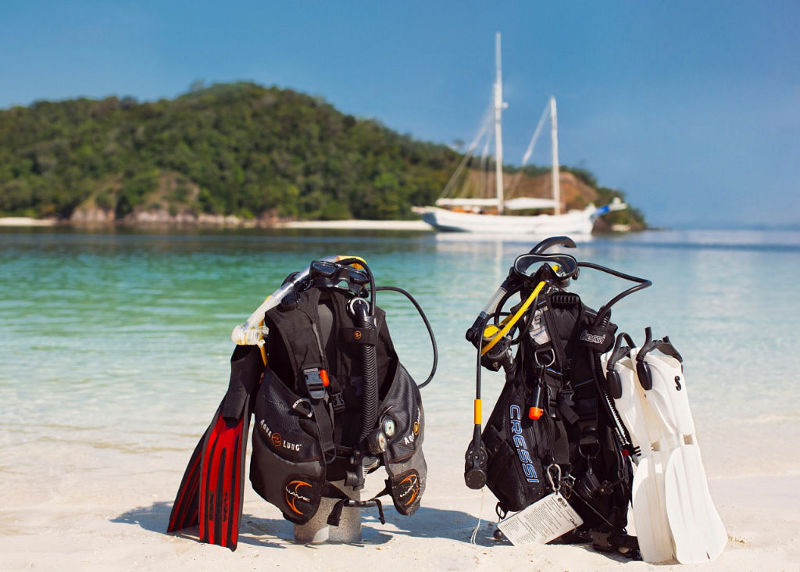
Bring your own SMB (at least 1.5 m, the tall orange sort, not a safety sausage) with a reel or spool you can deploy in current without thinking. Offshore it is not optional, and nor is a torch, which is as much a signalling device as a light. A computer is assumed. Most offshore operators now either require or lend a GPS locator beacon for drift pickups, so check which. One rule catches people out: night diving is forbidden in the offshore marine parks, so any night dives on your schedule will be on the sheltered northern moorings, not at the Brothers or Daedalus.
Nitrox earns its keep here. Repetitive 25–30 m profiles, three or four times a day for the better part of a week, is the problem EANx32 solves, and it lengthens the dives that matter. It is included on some boats and a weekly supplement on others; you need the certification, and most boats teach it on board in a day. Insurance that explicitly covers liveaboards and recompression is a condition of boarding on almost every vessel.
Why offshore itineraries get rerouted
A northerly wind runs down the length of the Red Sea for much of the year. Inshore the reefs break it; out at the Brothers and Daedalus nothing does, so a forecast that is merely uncomfortable in Hurghada can make an exposed offshore mooring untenable. The skipper then either sits it out on a sheltered reef or turns and runs a northern route for the rest of the week. That is normal rather than over-caution, and it is the commonest source of disappointment offshore: if the whole trip hangs on standing at Daedalus, book two weeks or accept the odds. The same wind makes the run out from Port Ghalib or Marsa Alam the place where people find out whether they get seasick.
Who this isn’t for
If your last dive was more than a year ago, or you are still counting your dives in single figures, a boat week is the wrong shape for you until you have had a few days back in the water. Not because you could not dive the sites, but because there is no way to opt out of anything. You cannot sit out an afternoon and walk to the beach, you cannot ask for a shallower version, and the group moves at the group’s pace. If that is where you are, a resort week with a house reef gives you the same water with a way out of it, and it is the right year to book one. What we will not do is talk you off a boat altogether at 25 dives, because the northern route and the simple north-and-Tiran week are built for exactly that diver. It is the offshore itineraries that need 50 dives behind you, not liveaboards as a category.
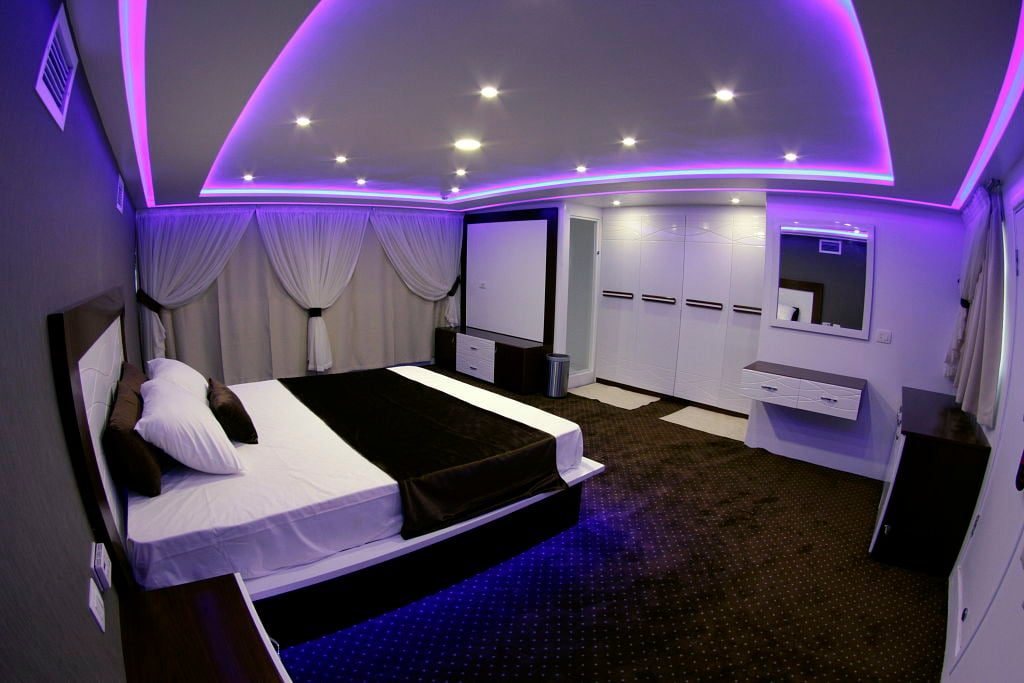
It is also wrong for a mixed party. There is nothing aboard for a non-diver but a sundeck and a book: no shops, no pool, nowhere else to be for seven nights. Families with children under about 15 hit the same wall, plus the depth limits that apply to junior certifications and the fact that the offshore boats plan their day around a 30 m plateau. And if a comfortable bed and a proper shower are part of what you are paying for, most Red Sea cabins are compact and the water pressure is what it is.
It suits divers from about 25 dives on the northern routes, and 50 on the offshore ones, who want to be in the water three or four times a day, do not mind eating and sleeping within 20 metres of their kit, and would rather reach a reef nobody can drive to. If that is you, the itinerary matters far more than the boat, and we would rather talk you through the Egypt liveaboard itineraries and their dive minimums before anyone looks at cabin plans.
Frequently asked questions
How many logged dives do you need for a Red Sea liveaboard?
It depends on the route. Northern wrecks and reefs itineraries generally want around 20 to 25 dives, and a few operators will take a newly qualified Open Water diver on the simpler Sharm-based routes. Brothers, Daedalus and Elphinstone normally ask for 50 logged dives plus an Advanced certification. Deep south and St John’s trips are gentler and usually sit around 30 dives and Advanced. Several operators add a recency condition, so a long gap since your last dive can count against you even when your total is fine.
Which Red Sea liveaboard itinerary is best for a first trip?
The northern wrecks and reefs route out of Hurghada. The moorings are sheltered, the crossings are short, most of the wrecks sit shallower than 30 metres and the schedule leaves room to find your feet. You still get the Thistlegorm and the four Abu Nuhas wrecks, which are the sites most people book Egypt for in the first place. Save the offshore reefs for a second boat week, once four dives a day feels normal.
Which liveaboard route includes the Thistlegorm?
The northern wrecks and reefs itineraries, which leave from Hurghada and work the Strait of Gubal. She is also reachable as a very long day trip from Sharm el Sheikh, but that means a pre-dawn start, roughly three hours on a boat each way and two dives on a wreck that by then has every day boat in the strait sitting on it. A liveaboard moors on her overnight and dives her three or four times, including the first dive of the morning before the day boats arrive.
What is the best time of year for a Brothers and Daedalus trip?
Roughly March to early December. Contrary to what you will read on the forums, there is no annual closed season on the offshore islands (operators publish Brothers and Daedalus departures all year) but from December to February the wind makes those exposed moorings a poor bet, so the schedule thins and boats sell northern routes instead. Access can also be suspended at short notice by the Egyptian authorities, as the Brothers were from late December 2018 until the following March. Late spring into high summer is the window for hammerhead schools at Daedalus, and October to December, peaking in November, is when oceanic whitetips turn up at Elphinstone and the Brothers. Neither is guaranteed, and wind can close the offshore moorings in any month.
How many dives do you get on a week-long Red Sea liveaboard?
Usually between 17 and 20. A standard seven-night trip boards the evening you land, dives from the next morning and runs three or four dives a day, with night dives on the sheltered northern moorings, since the offshore marine parks do not allow them. The last day is cut short because boats stop diving roughly 24 hours before your flight home. Deep south itineraries are sometimes sold as 10 nights so the long crossings eat less of the diving.
Not sure which Red Sea itinerary to book?
Tell us how many dives you have logged, when you can travel and what you want to see. We will tell you which route fits, which boats are running it that week, and when to wait a season.
Free, with no obligation and no booking fee. We’re a UK dive tour operator, trading since 2001 —
every resort and liveaboard we sell has been dived by one of our own team. Mon–Fri, 09:00–18:00 UK ·
ATOL protected (T7314) and Travel Trust Association members.
Weighing the Red Sea against everywhere else? Our guide to the best scuba diving holidays ranks 20 destinations by season and who each one suits.