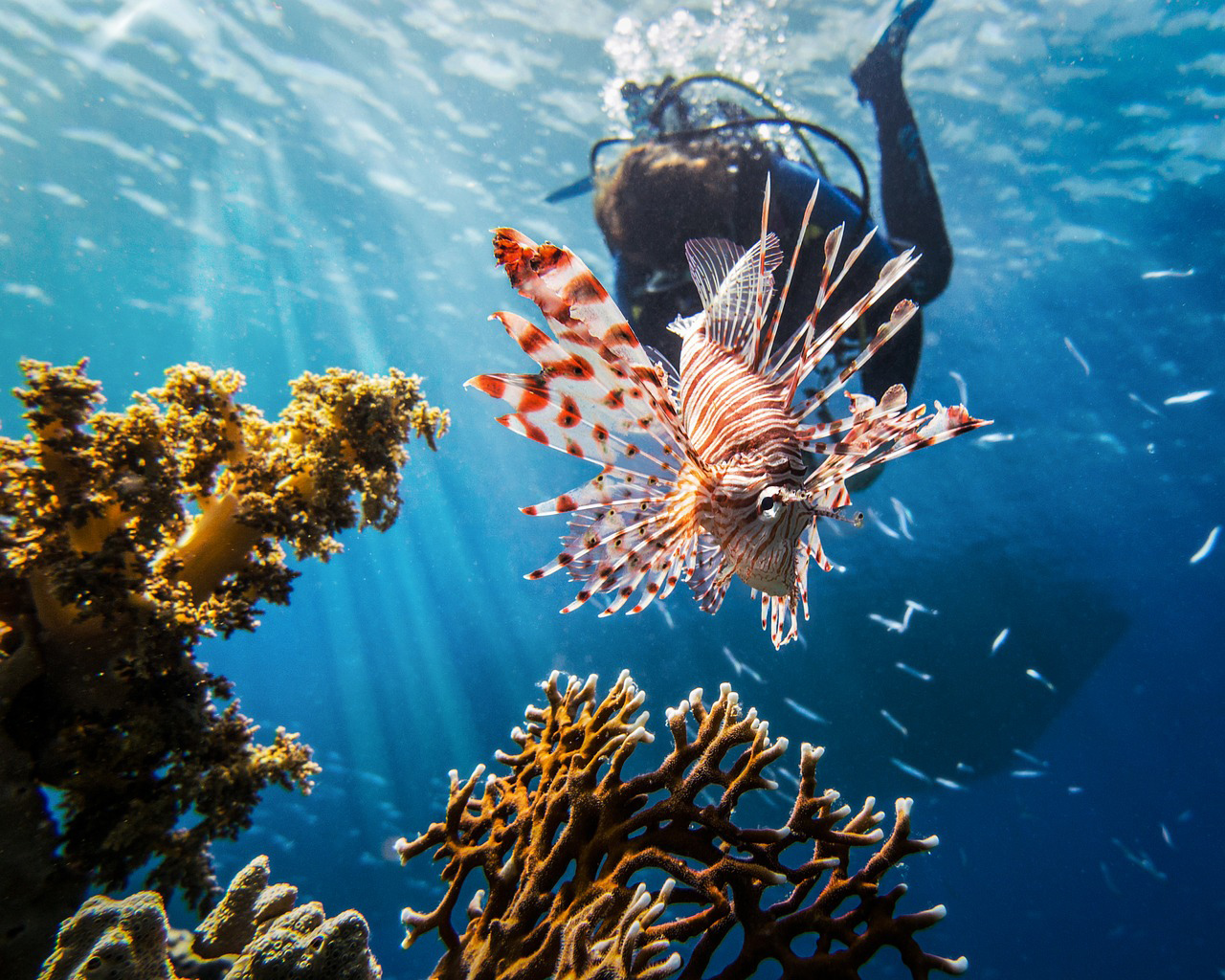
Egypt’s four main Red Sea bases suit different divers. Sharm el Sheikh has the strongest day-boat diving in the north. Hurghada and El Gouna are the easiest to reach and the kindest to mixed groups. Marsa Alam and El Quseir hold the house reefs, the shore diving and the shortest run to the southern sites.
Nearly everyone who asks us about Egypt has already settled on the Red Sea. The real question is which stretch of it. At one base you dive almost entirely from a boat; at another you can dive before breakfast, in bare feet.
Which base suits which diver
The mainland bases sit along a few hundred kilometres of coast road, with Sharm out on Sinai. Where you land decides what you can reach in a day, and whether you need a boat at all. When people ask us about Egypt diving holidays, that is the decision we work through first.
| Base | Reef access | Shore or boat | Who it suits | The trade-off |
|---|---|---|---|---|
| Sharm el Sheikh | Ras Mohammed and the Tiran reefs, a day boat away | Boat, almost entirely | Divers wanting the north’s best sites and short transfers | Almost no shore diving; the famous sites are busy |
| Hurghada & El Gouna | Offshore islands and the Abu Nuhas wrecks | Boat; sheltered shallows for training | First Red Sea trips, learners, groups with non-divers | Inshore reefs are tired; good sites are a long ride |
| Marsa Alam | House reefs off the beach, plus Elphinstone and seagrass bays | Both, genuinely | Divers who want to dive before breakfast, unbooked | Long coast-road transfers; little to do beyond diving |
| El Quseir | House reef is the main event; offshore sites are further | Shore, with day boats as the extra | Photographers, self-sufficient pairs, anyone wanting quiet | Few hotels, few centres, and quiet means quiet |
| Liveaboard | Offshore marine park reefs no day boat can reach | Boat, all week | Experienced divers wanting the country’s best reefs | No beach, no sitting a day out, experience minimums |
Sharm el Sheikh: two first-rate sites, nearly all of it by boat
Sharm sits at the southern tip of Sinai, and its case rests on two things. Ras Mohammed National Park, where the wall at Shark and Yolanda Reef gathers fish in numbers that surprise people on their tenth visit. And the Strait of Tiran – Gordon, Jackson, Woodhouse and Thomas – four reefs that run current and reward divers who can read it. Both are ordinary day boats out of the marina.
What Sharm does not give you is shore diving. A few hotels have a house reef worth an hour, but diving here happens from a boat, on a schedule. The Thistlegorm is possible as a very long day with a pre-dawn start, though anyone who cares about that wreck is better served by a liveaboard. Sharm el Sheikh suits divers who want the north’s best sites, short transfers, and plenty ashore for a non-diving partner.
Hurghada and El Gouna: the easy arrival, and the wreck reef
Hurghada has the widest choice of UK flights, and often the cheapest, so a lot of first Red Sea trips start there. The reefs are all offshore – the Giftun islands, Umm Gamar, Shaab El Erg – and the sites nearest town have absorbed decades of traffic. The reason to come is Abu Nuhas, a reef with four wrecks along it, most shallow enough to dive properly rather than glimpse.
Sheltered shallows and as many dive centres as anywhere in the country also make this the sensible place to learn to dive. El Gouna, half an hour or so north of the airport, is the version we book most: a low-rise town built around lagoons, calmer than Hurghada, and the one base here where a non-diving partner also has a good week.
Marsa Alam and El Quseir: how far south do you need to go?
Not as far as the forums suggest. Ras Mohammed and Tiran are as good as anything in Egypt, and no southern reef makes them look ordinary. What going south buys is different: reefs you can walk into, far less pressure on the inshore sites, and a shorter run out to the offshore reefs.
Marsa Alam has its own airport and a coastline of bays, many with a house reef straight off the beach. Elphinstone is a day boat away when the sea allows – a deep offshore reef with real current, not a site for your fifth dive. The seagrass bays closer in hold green turtles and sometimes dugong, though nobody can promise you one.
El Quseir is the quiet one: an old port town with a few hotels chosen almost entirely for what sits off the beach. If a good week means four unhurried dives a day on the same reef, learning where the octopus lives, nothing else in Egypt comes close. It is also the dullest if you want a bar. Between them, these two cover most of the diving holidays in Egypt we sell to divers with a few dozen dives logged.
When to go, and what the water is doing
Egypt dives year-round, which is much of its appeal. The water is coolest in February and March – low twenties in the north, a few degrees warmer further south – and warmest from late summer into October, when it reaches the high twenties. A 5 mm suit covers most of the year; take a hood in winter.
Air temperature is the bigger call. High summer on the mainland coast is punishing on land, spring and autumn are the comfortable months, and winter wind chops up crossings and cancels the odd offshore day. Pelagic seasons are worth planning around: the oceanic whitetips at Elphinstone are an autumn thing, hammerheads on the far offshore reefs a summer one, and neither is guaranteed.
What a liveaboard reaches that a day boat cannot
The Brothers, Daedalus and St John’s are too far offshore to be day-boat sites, from any hotel at any latitude. They are also the best diving in the country: steeper walls, more sharks, no day-boat traffic. Northern routes cover the Thistlegorm, the Rosalie Moller and Abu Nuhas properly, with the wrecks to yourselves before the day boats show up.
Southern itineraries usually leave from Port Ghalib or further down the coast, for Fury Shoals and the deep south; northern ones from Hurghada. Most offshore routes ask for a decent logged-dive count and comfort in current, and the offshore marine parks close for part of the winter, so a January boat runs elsewhere. If a resort week left you frustrated by the day-boat rhythm, an Egypt liveaboard is the honest next step.
Who this isn’t for
If you want to dive on your own timetable, with no boat, no group and no briefing at half past eight, Egypt only half-delivers. El Quseir and the better Marsa Alam house reefs come closest, but Bonaire does it properly: tanks in the back of a truck, dive where and when you like. If that is your idea of a diving holiday, we would rather say so now.
Egypt is also the wrong choice if you are chasing one animal in one particular week. The Red Sea rewards divers who like reefs, walls and wrecks; it does not do appointment viewing. And if you want warm, flat, forgiving conditions in January, the northern bases can be windy and blown out in midwinter. Going south fixes some of that, not all.
Frequently asked questions
Is Sharm el Sheikh or Hurghada better for diving?
They suit different trips. Sharm has the stronger diving, because Ras Mohammed and the Tiran reefs are within a day boat’s reach and nothing near Hurghada matches them. Hurghada has more UK flights, usually cheaper fares, easier training conditions and the Abu Nuhas wrecks. If the diving is the whole point, choose Sharm. If it is a first Red Sea trip or a mixed group, Hurghada or El Gouna.
Do I have to go to Marsa Alam to get the good reefs?
No. Ras Mohammed and Tiran in the north are as good as anything in Egypt. What the south gives you is house reefs off the beach, far less pressure on the inshore sites, and a shorter run out to the offshore reefs. The wilder diving, at the Brothers, Daedalus, Fury Shoals and St John’s, is liveaboard-only wherever you stay.
Where in Egypt can you dive from the shore?
El Quseir and the Marsa Alam coast. Hotels along that stretch are chosen for what sits off the beach, and unlimited house-reef diving is normally part of the package. Sharm el Sheikh is almost entirely boat diving, and so are Hurghada and El Gouna, where the reefs are all offshore. If shore diving matters to you, book south.
When is the best time to dive the Red Sea?
It dives all year. Spring and autumn are the most comfortable: warm water, bearable air temperatures, less wind. February and March are the coolest in the water, low twenties in the north, so take a hood. High summer is punishing on land but the water is warmest from late summer into October. Winter brings northerly wind and the occasional cancelled offshore day.
Do I need a liveaboard to dive the Brothers and Daedalus?
Yes. They sit too far offshore for any day boat, from any resort, at any latitude. Liveaboards run to them from Hurghada and from Port Ghalib, usually asking for a decent logged-dive count and real comfort in current. The marine park reefs also close for part of the winter, so winter boats run different routes. Check the itinerary before booking flights.
Not sure which Red Sea base is right for you?
Tell us how many dives you have logged, when you can travel, and whether you would rather walk into the water or ride out on a boat. We will tell you which base fits, including when the honest answer is a liveaboard rather than a resort week.
Free, with no obligation and no booking fee. We’re a UK dive tour operator, trading since 2001 —
every resort and liveaboard we sell has been dived by one of our own team. Mon–Fri, 09:00–18:00 UK ·
ATOL protected (T7314) and Travel Trust Association members.