Diving the Seychelles: granite inner islands, outer atolls and the seasons
The Seychelles is two dive destinations wearing one name. The inner granitic islands (Mahé, Praslin and La Digue) are boulder-field diving in 10 to 30 m, with scheduled flights, hotels and plenty for non-divers. The outer atolls, from the Amirantes to Aldabra, are liveaboard country, far more expensive, and a different holiday altogether.
Almost every Seychelles enquiry we take is about the inner islands, even when the caller has spent a fortnight reading about Aldabra. The two halves share a flag and very little else: not the geology, not the access, not the price. Working out which one you mean is most of the job.
Which Seychelles are you asking about
The inner islands are granite. That is unusual in mid-ocean, and it is the single fact that shapes the diving. Instead of coral bommies growing off a sand floor, you get house-sized boulders stacked into canyons, swim-throughs and overhangs, with soft coral, sponge and fish life growing over the rock. Mahé holds the international airport; Praslin is 15 minutes away by light aircraft or an hour by fast ferry, and La Digue a further 15-minute ferry hop.
The outer islands are the opposite: true coral atolls, spread over more than 1,000 km of open ocean to the south-west. Two of them, Desroches and Alphonse, have an airstrip and a single resort each. The rest (Poivre, St Joseph, Farquhar, Cosmoledo, Astove and Aldabra) have no dive resort on them, so a boat is the only practical way in, on itineraries of ten nights and upwards. When we price diving holidays in the Seychelles, that split is the first thing we settle, because the two versions of this country barely overlap on cost, season or experience level.
| Where | Getting there | What you dive | Who it suits | The trade-off |
|---|---|---|---|---|
| Mahé (inner) | One-stop international flight; no UK nonstop at present | Granite pinnacles off Beau Vallon; the broken Ennerdale wreck at 30 m | First trips, mixed groups, one-week stays | The busy island: traffic, a capital and a working port |
| Praslin and La Digue (inner) | 15 minutes by air or about an hour by ferry from Mahé | Outlying rocks and islets — Aride, Booby, Ave Maria, the Sisters | Divers wanting quieter sites and better beaches | More exposed to wind; fewer centres to switch to |
| Inner-island liveaboard | Boards on Mahé | The same granite sites plus Silhouette and the northern outcrops, three dives a day | Divers who came for dive count, not for the beach | A very small fleet, booked out a long way ahead |
| Desroches or Alphonse (outer) | Light aircraft from Mahé, roughly 35 to 70 minutes | True atoll drop-offs, steeper profiles, more pelagic traffic | Divers wanting the outer islands without a boat week | One resort per island, at the price that implies |
| Amirantes to Aldabra (outer) | Liveaboard expedition, 10 to 14 nights | Unfished atoll reefs, big shark and ray numbers, Aldabra’s tidal passes | Experienced divers on a once-in-a-decade trip | Long crossings, permits, and days from a chamber |
What diving the granite is actually like
These are structures rather than gardens. A typical inner-island dive runs 12 to 25 m over and between boulders, following the rock rather than a reef edge, and the interest is in the architecture and what shelters inside it: batfish, schools of fusilier and snapper, hawksbill turtles, whitetip reef sharks asleep under ledges, nurse sharks, eagle rays and some large stingrays. Macro is decent without being the reason to come.
The named sites do more than the house reefs. Shark Bank, a granite tower roughly 8 km off Beau Vallon on Mahé, bottoms out near 30 m and runs real current; it is where the big rays and the occasional whale shark turn up, and it is not a site for your tenth dive. Brissare Rocks, a few kilometres off the north of Mahé, is shallower at 10 to 20 m, but do not read shallow as easy: it sits exposed and can run as much current as Shark Bank, which is why centres schedule it when the forecast allows rather than every week. The Ennerdale, a Royal Fleet Auxiliary tanker lost in 1970, lies in about 30 m off Mahé and is thoroughly broken up — treat it as a fish aggregation rather than a wreck dive. Most centres run a two-tank morning boat five or six days a week, so a normal week produces 10 to 12 dives rather than 20.
Which inner island should you base on
Mahé is the practical choice for a first visit: the airport, the widest choice of hotels, the most dive centres, a hospital, and the Beau Vallon sites a short ride out. It is also the busy one, with traffic, a port and a small capital, which is what some people want and others came to avoid.
Praslin and La Digue are quieter, and the diving around the outlying rocks and islets, from Aride down to South Marianne, generally has the more reliable shark and ray sightings of the two halves of the inner group. The trade-off is exposure: dive days here are more easily lost to wind, and there are fewer centres to move to when one cancels. We often build a fortnight as a week on Mahé and a week on Praslin to split that risk, and the hotels we use in the Seychelles are picked for how their dive operation runs rather than how the pool photographs.
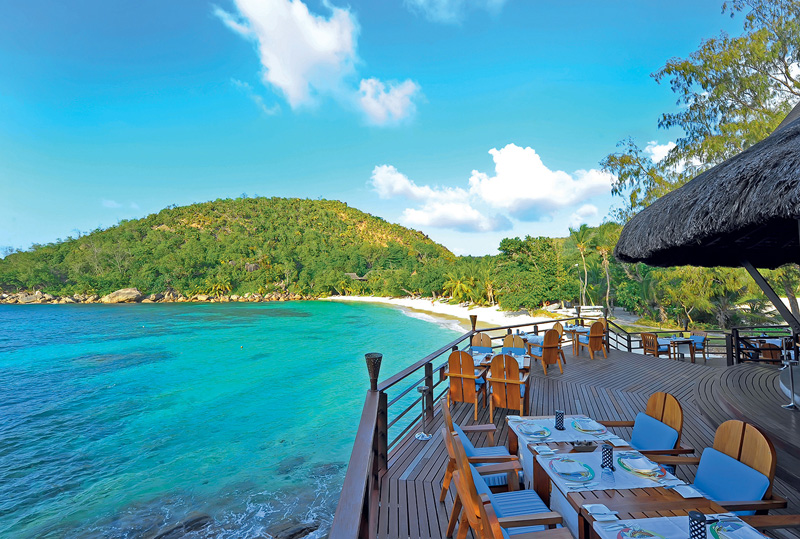
If a non-diver is coming, this is where the inner islands earn their keep. Beaches within walking distance, the Vallée de Mai on Praslin, Anse Source d’Argent on La Digue, hiking on Mahé, no malaria and short transfers make this one of the easier destinations for family dive holidays where only one or two of the party actually get wet.
When to go, and why the transition months keep coming up
Two monsoons set the calendar. The south-east trades blow from roughly May to September: cooler, windier, choppier crossings, more plankton in the water and visibility that can fall to 10 to 15 m. The north-west monsoon runs roughly November to March, which is calmer under water but wetter and more humid above it, particularly in January.
The months the trade books first are the transitions. April and October sit between the two systems, when the wind drops, the sea flattens and visibility commonly runs 20 to 30 m. Water temperature stays between about 26 and 30°C all year, coolest in July and August, warmest in March and April. A 3 mm suit covers most of the year; take a 5 mm if you are diving five days a week in the south-east season.
Whale sharks, and how short the window is
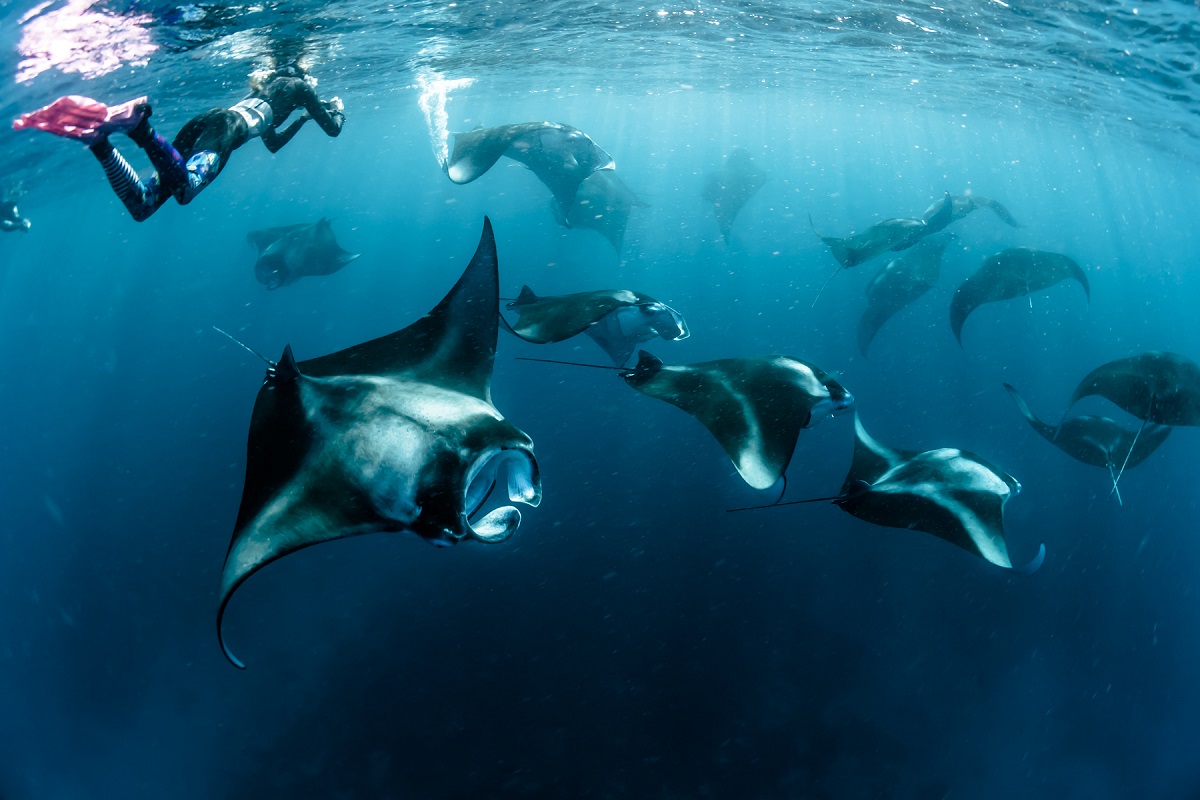
The aggregation off Mahé runs roughly from August into November, and September and October are the months the sightings cluster in. It is a monitored, seasonal event rather than a line on a brochure, but two things surprise people. Encounters are almost always on snorkel rather than scuba, with boats working to spotters under a code of conduct on numbers and distance. And it is weather-dependent and unbookable: nobody can promise you a whale shark on a given Tuesday. If it is the reason for the trip, come in September or October and allow ten days rather than six.
What the bleaching left, and what is actually there now
The 1998 El Niño event killed more than 90 per cent of the hard coral cover across the granitic inner islands (Nature Seychelles puts it in exactly those terms) and the 2016 global bleaching event hit the recovering reefs again. Recovery since has been patchy: some sites have rebuilt decent stands of branching and table coral, while others still look thin above 8 or 10 m.
What carries the destination is that the topography is rock. The granite sites never depended on coral for their structure, so the canyons, swim-throughs and fish life are still there in a way they would not be on a reef the coral itself built. If living hard coral is the point of the holiday, though, say so early — the walls off Pemba and the reefs around Mafia in Tanzania hold more of it, and so do most Indian Ocean atolls.
What an outer-atoll trip actually involves
Aldabra sits about 1,150 km south-west of Mahé, which is roughly London to Barcelona, with open ocean and nothing else in between. It is a UNESCO World Heritage Site carrying something like 100,000 giant tortoises, with tidal passes draining a lagoon big enough to swallow the whole of Mahé (the Seychelles Islands Foundation, which runs the atoll, makes that comparison itself) and fish and shark numbers most divers have never seen at that density. Access is controlled rather than merely remote: every visiting vessel needs written clearance from the foundation before it can anchor or put anyone ashore, there is a conservation fee charged per person per day on top of the boat fare, the handful of boats that go sail 10 to 14 nights in a short annual window, and berths go a long way in advance.
The rest of the outer group is more reachable. Desroches, around 230 km from Mahé, and Alphonse, roughly 400 km, each have an airstrip, a light-aircraft link and a single resort, so you can dive atoll drop-offs without committing to a two-week crossing. Anyone weighing a boat week against a room with a dive centre attached will recognise the argument we set out in liveaboard versus resort in the Maldives. Out here it leans harder towards the boat, because the best outer sites have no hotel anywhere near them.
What it costs you in travel time
Nobody flies London to Mahé nonstop at the moment. British Airways ran the route and dropped it in 2023, and a nonstop would sit at about ten and a half hours if it ever comes back. In practice every itinerary we book connects, usually through a Gulf hub, Istanbul, Addis Ababa, Nairobi or Paris, which puts realistic door-to-door at 14 to 18 hours. The islands are four hours ahead of UK winter time and three ahead in summer, so jet lag is close to a non-issue, which matters on a one-week trip.
Then the local legs. Inter-island flights carry a much lower checked baggage allowance than the international sector, usually around 15 to 20 kg, so check the figure before you pack: dive kit eats it quickly. Marine park fees are charged per person per day, park by park — Ste Anne, Baie Ternay and Port Launay, Curieuse and Île Cocos are the ones you are most likely to be billed for — and they are rarely inside a dive package. Aride is not one of them: it is a special reserve run by the Island Conservation Society, with its own landing fee if you go. The Seychelles is one of the more expensive places we sell, and the outer islands multiply that rather than adding to it.
Who this isn’t for
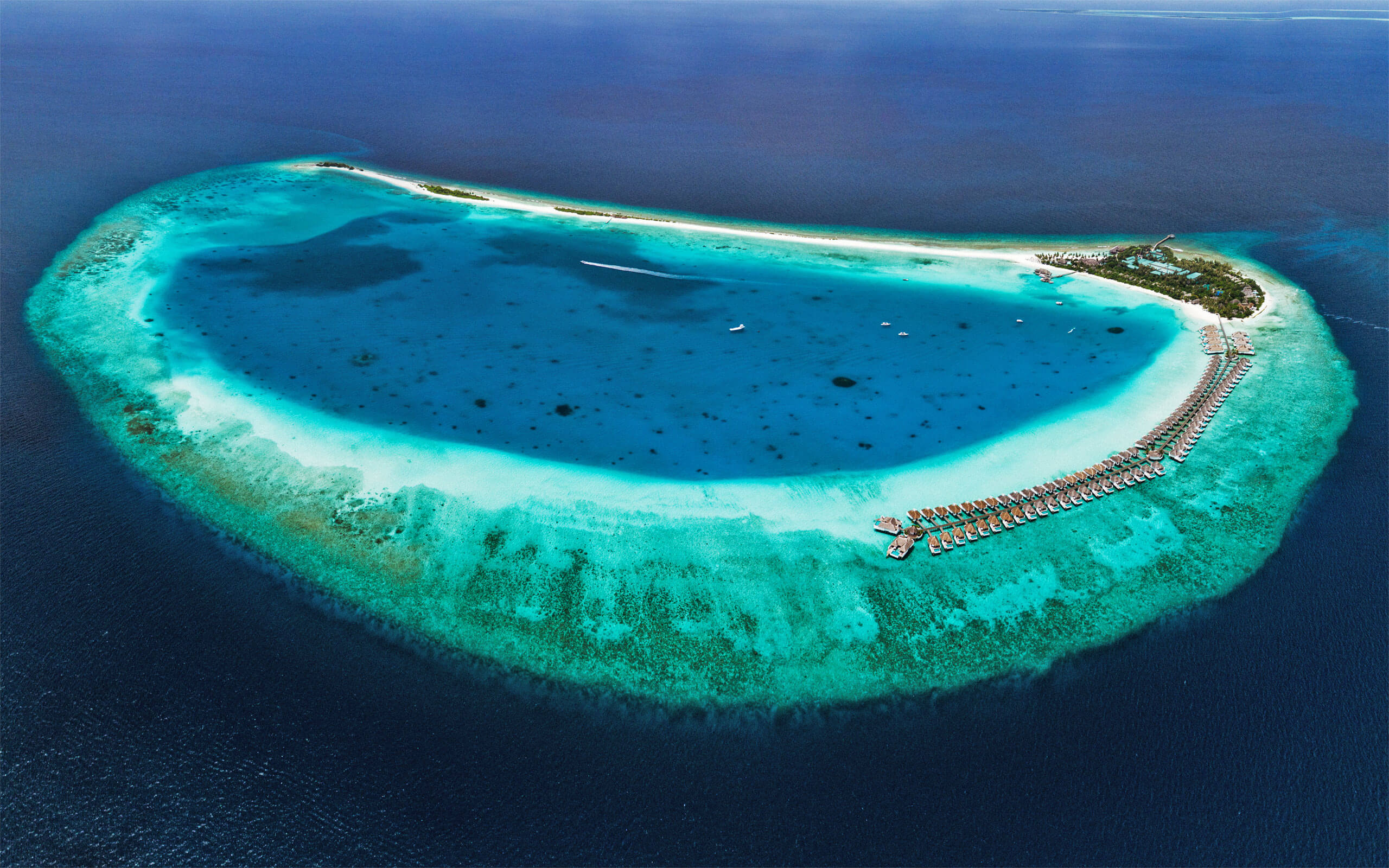
If you want dense hard coral, three or four dives a day and the best value per dive in the Indian Ocean, book the Maldives instead. Channel and thila diving gives more reliable big-animal traffic from a vastly larger fleet, and a Maldives resort week will beat a Seychelles week on the things that can actually be counted: dives per day, live coral cover, cost per dive. What it will not give you is the granite, and that is the whole reason the Seychelles is on this list at all.
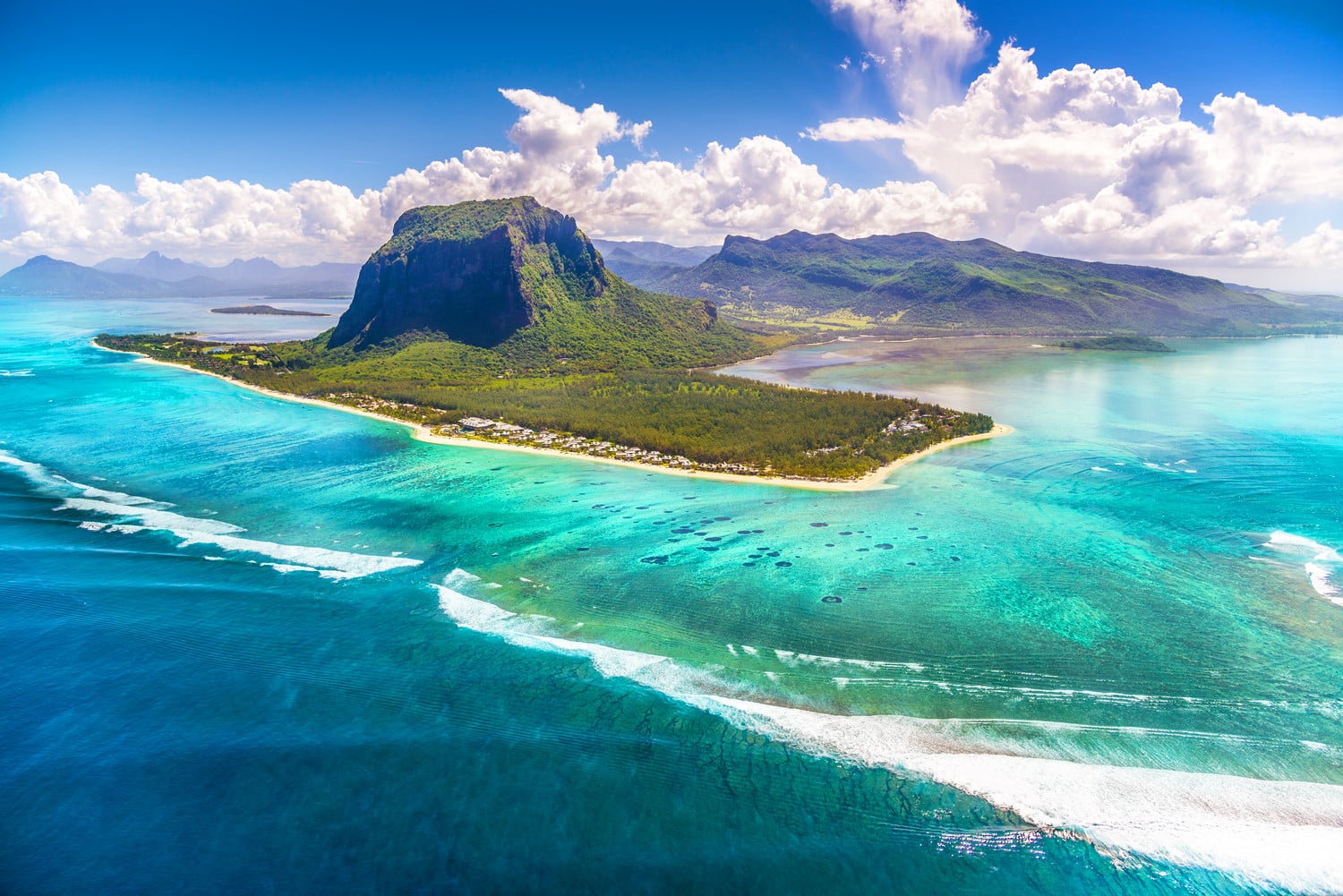
If the diving is a bonus rather than the point and the budget is the binding constraint, the Seychelles is a hard sell. Mauritius costs less, and it is the easier flight rather than merely an equal one — British Airways and Air Mauritius both go nonstop from London, which is more than the Seychelles can offer — and it does the beach-holiday-with-diving job well, though the diving there is quieter than the Seychelles at its best, and that is the trade you would be making.
And if you need a particular animal in a particular week, look elsewhere. The whale shark season is a season, not a schedule, and the south-east monsoon can take two days out of a six-day dive week on wind alone. Divers who need certainty are usually happier somewhere with a year-round aggregation site and enough boats to switch between.
Who it does suit: divers who like topography, who would rather have 12 good dives among granite canyons than 20 interchangeable ones, who are travelling with someone who does not dive, and who can move their dates to April or October. That is the profile we book a Seychelles dive trip for most often, and when it plainly is not, we say so on the phone.
Frequently asked questions
When is the best time to dive the Seychelles?
April and October. They sit between the two monsoons, when the wind drops, the sea flattens and visibility commonly runs 20 to 30 m. The south-east trades from May to September bring choppier crossings and more plankton in the water; the north-west monsoon from November to March is calmer below the surface but wetter above it. Water stays between about 26 and 30°C all year, at its coolest in July and August.
Is the coral in the Seychelles dead?
Damaged rather than dead. The 1998 El Niño event killed much of the shallow hard coral in the inner islands, and the 2016 bleaching hit the recovering reefs again, so shallow sites can still look thin. The diving works anyway because the inner-island sites are granite. The boulders, canyons and swim-throughs are rock, so the structure and the fish life survived where coral cover did not.
Can you dive with whale sharks in the Seychelles?
You can usually swim with them on snorkel rather than on scuba. The aggregation off Mahé runs from roughly August into November, with September and October the months sightings cluster in, and boats work to spotters under a code of conduct covering numbers in the water and distance from the animal. Sightings depend on weather and luck, so allow ten days rather than six if this is the reason for the trip.
Do you need a liveaboard to dive the Seychelles?
Not for the inner islands. Mahé, Praslin and La Digue all have shore-based centres running two-tank morning boats, which produces 10 to 12 dives in a normal week. A boat is effectively the only way to reach the outer atolls, meaning Farquhar, Cosmoledo, Astove and Aldabra, on trips of 10 to 14 nights. The exceptions are Desroches and Alphonse, which each have an airstrip and a resort.
Seychelles or Maldives for diving?
The Maldives gives you more diving for the money: more dives per day, a far bigger fleet, denser hard coral and more reliable manta and whale shark traffic. The Seychelles gives you granite topography that does not exist in the Maldives, real islands to explore between dives and much better company for a non-diver. If dive count decides it, book the Maldives. If the days out of the water matter, book here.
Inner islands or an outer atoll trip?
Tell us when you can travel, how many dives you have logged and whether a non-diver is coming. We will match the island and the season to that, and say plainly when the Maldives fits you better.
Free, with no obligation and no booking fee. We’re a UK dive tour operator, trading since 2001 —
every resort and liveaboard we sell has been dived by one of our own team. Mon–Fri, 09:00–18:00 UK ·
ATOL protected (T7314) and Travel Trust Association members.