Last updated: 3 August 2026 · written by the Planet Dive Holidays team, who dive these sites themselves.
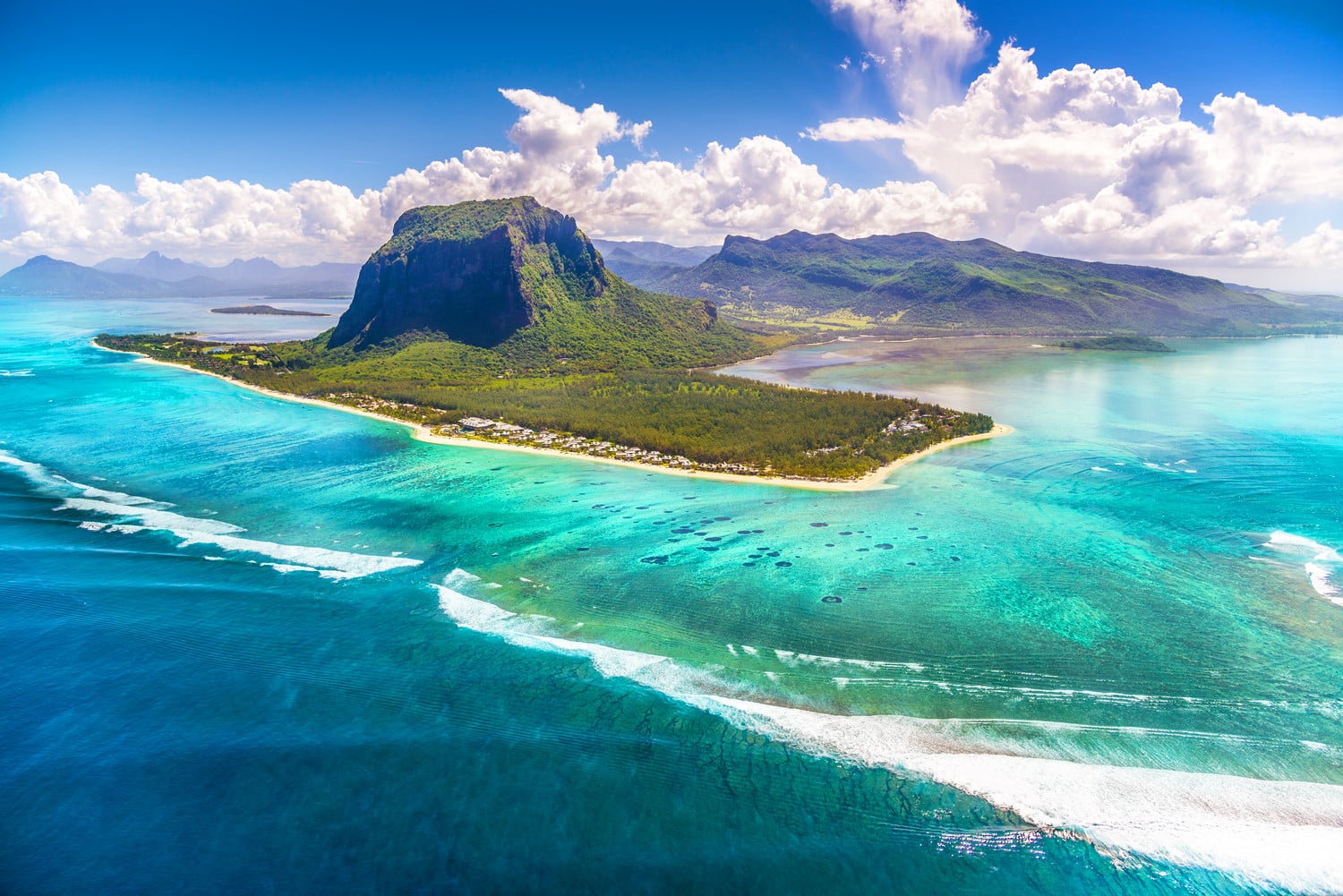
Mauritius is a good diving destination, but not for the reason most people assume. It is not a big-animal destination in the way the Red Sea or the Maldives are. What it offers instead is warm, calm, forgiving water over reef and wreck, a barrier reef that shelters most of the coast, and dive sites you can reach in ten to twenty minutes from the beach. That combination makes it one of the easiest places in the Indian Ocean to dive well without the trip revolving around diving.
Where the diving actually is
Almost all diving in Mauritius happens on the west and north-west coasts. That is not an accident of where the hotels were built — it is the wind. The prevailing south-easterly trades hit the south and east of the island, so the west sits in the lee and stays diveable when the other side is blown out. If you are choosing a hotel primarily for diving, that single fact should drive the decision.
| Area | Known for | Best months | Suits |
|---|---|---|---|
| Flic en Flac (west) | The Cathedral — a cavern of soft coral and swirling light. The island’s signature dive. | Nov–Mar | Improver upwards |
| Trou aux Biches (north-west) | The Stella Maru wreck, easy reef, the biggest concentration of dive centres | Year round | Beginners and improvers |
| Coin de Mire (north) | Offshore islet dives, drop-offs, more fish, more current | Nov–Apr | Confident divers |
| Rodrigues (90 min flight) | Untouched reef, almost no other divers, dramatic topography | Sep–Dec | Divers who want the diving to be the point |
When to go
You can dive Mauritius in any month. The question is what you are optimising for.
- November to March gives the best visibility and the warmest water — around 27–28°C at its peak. It is also the wetter half of the year and the cyclone window, so you are trading rain risk for clarity.
- April to June is the quiet sweet spot: water still around 25–26°C, settled weather, fewer people, lower prices.
- July to September is the coolest, roughly 22–23°C, and windier. Bring a 5mm suit. The west coast still dives well; the outer sites get scrappier.
If you want one sentence: April to June is the best value, November to March is the best water.
Who Mauritius suits — and who it doesn’t
It suits you if you are learning, returning to diving after a break, travelling with a non-diving partner, or diving two or three times on a holiday rather than twice a day for a week. Conditions are gentle, boat rides are short, and the resorts are good hotels rather than dive camps with beds.
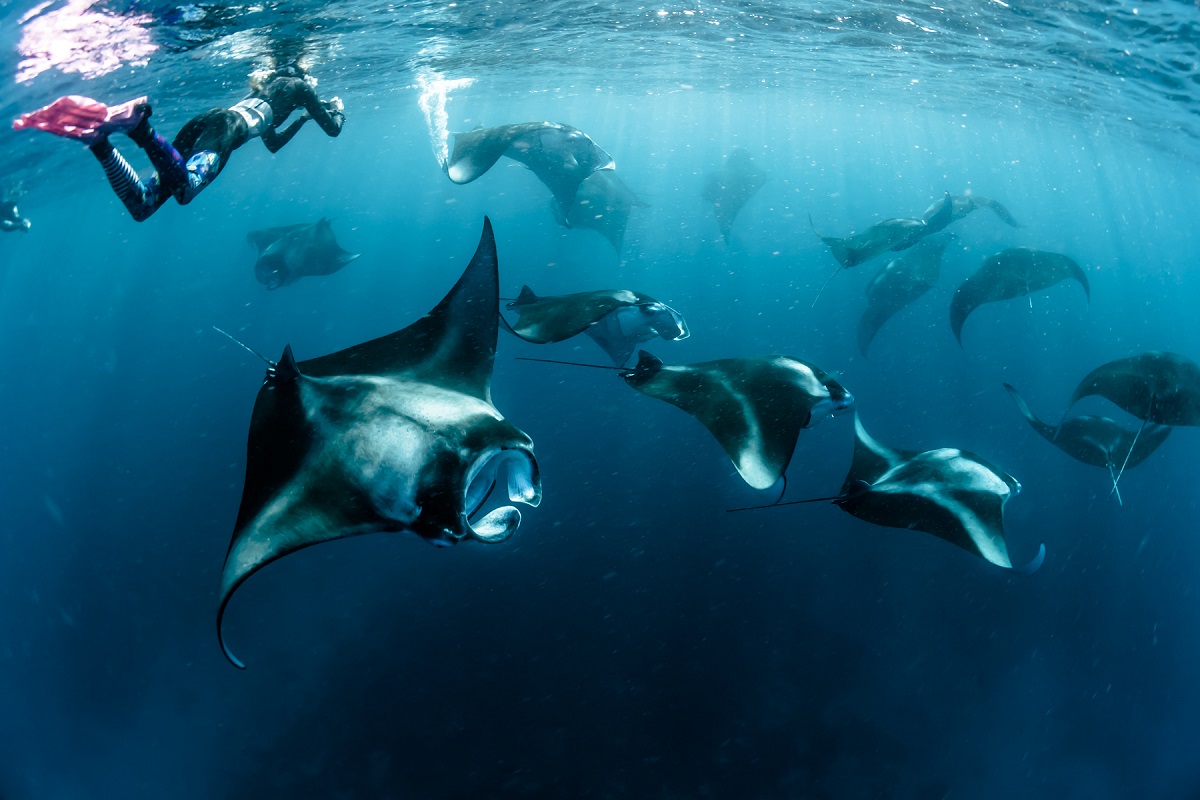
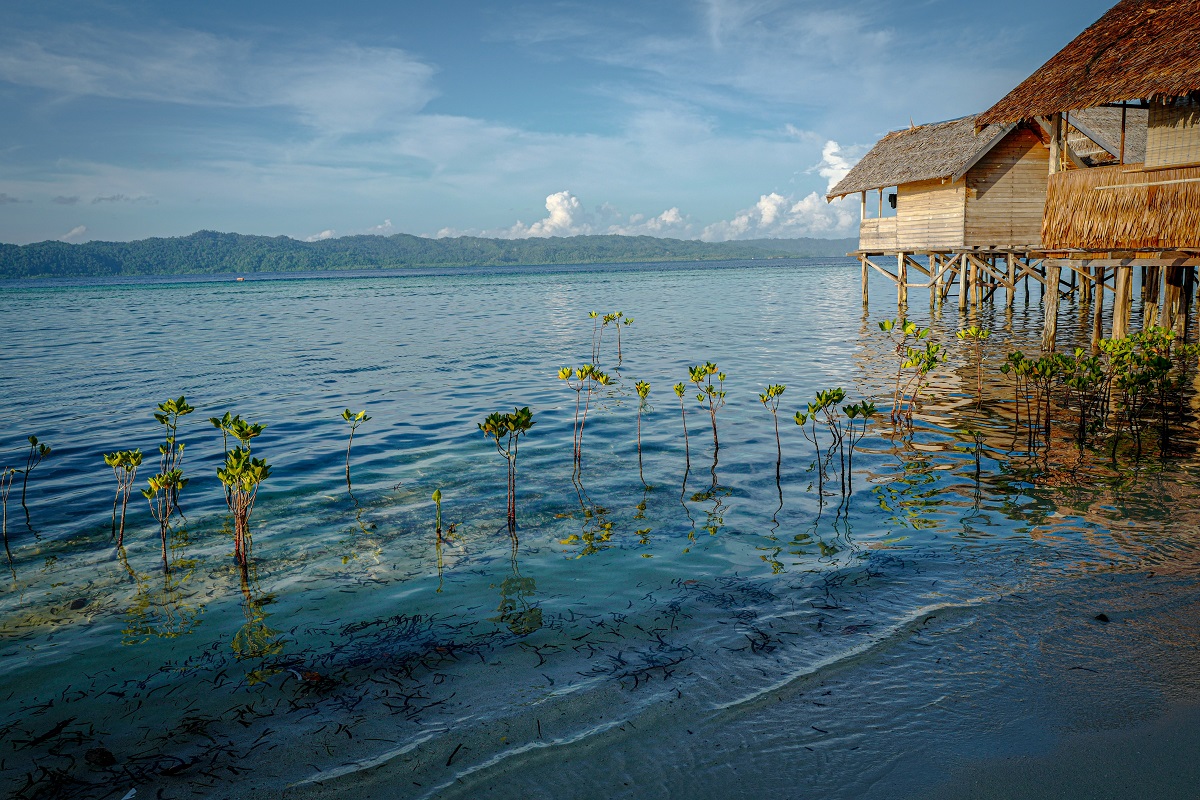
It will disappoint you if you are chasing sharks, mantas or big schooling pelagics. Mauritius has reef fish, moray, octopus, the occasional turtle and some very good wreck diving — but it does not deliver the density of life you get in the Maldives, Raja Ampat or the Red Sea. Divers who arrive expecting that leave underwhelmed, and we would rather say so before you book than after.
If big animals are the priority, the honest answer is a different destination — we compare twelve of them, side by side, in our guide to the best scuba diving holidays.
Where to stay for diving
All of these sit on the diveable side of the island and have a dive centre either on site or within a short transfer:
- Trou aux Biches Beachcomber — the most straightforward choice for divers. On the north-west coast, walking distance to the dive boat, and a strong all-inclusive.
- The St Regis Mauritius — the luxury end, on the west coast at Le Morne, with the Cathedral within reach.
- The Oberoi — quieter, north-west, good for couples where only one of you dives.
The full list, with what each dive centre is like rather than what its brochure says, is on our Mauritius diving holidays page.
Learning to dive in Mauritius
Mauritius is a good place to qualify. The lagoon inside the barrier reef is flat, shallow and warm, which removes most of what makes an open-water course stressful, and the dive centres on the north-west coast run courses continuously rather than only when they have numbers. A four-day PADI Open Water course fits comfortably inside a week’s holiday and still leaves time to do nothing. See our learn to dive holidays for how that works alongside a resort stay.
Worth adding: Rodrigues
Rodrigues is a ninety-minute flight east and feels like Mauritius forty years ago. The reef is in better condition, the topography is more dramatic, and on most dives you will not see another boat. It is not a luxury destination and the logistics take a little more organising, but for divers who want the diving to be the reason for the trip it is the better half of the country. We build it as an add-on to a Mauritius stay rather than a trip on its own.
Frequently asked questions
Is Mauritius good for diving?
Yes, for reef, wreck and easy conditions. Water is 22–28°C year round, most sites are a short boat ride from the beach, and the barrier reef keeps the water calm. It is a weaker choice if you specifically want sharks, mantas or big schooling fish.
When is the best time to dive in Mauritius?
November to March for the clearest water and warmest temperatures, April to June for the best balance of conditions, crowds and price. Diving runs year round; July to September is cooler and windier.
How warm is the sea in Mauritius?
Roughly 22–23°C at its coolest in August and 27–28°C at its warmest in February. A 3mm wetsuit is enough for most of the year; take a 5mm if you are diving in the southern winter or doing three dives a day.
Can beginners learn to dive in Mauritius?
It is one of the better places to learn. The sheltered lagoon inside the barrier reef gives flat, shallow, warm training conditions, and a PADI Open Water course takes about four days.
Is Mauritius or the Maldives better for diving?
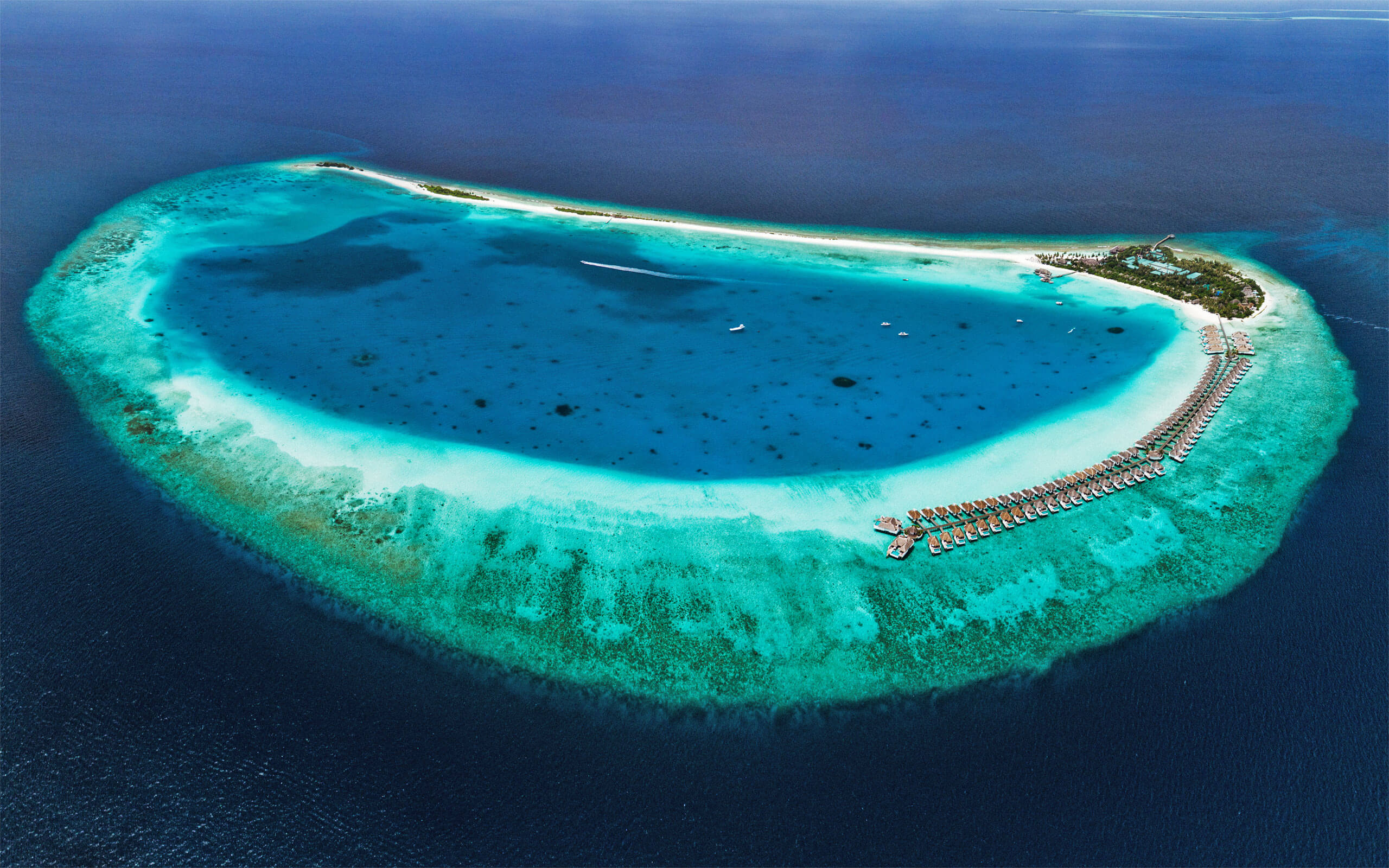
The Maldives is better underwater — more sharks, mantas and drift diving, and a far higher density of marine life. Mauritius is better above water for a mixed trip: it is a real island with towns, mountains and things to do when you are not diving, and it works better when only one of you dives.
Would Mauritius actually suit the way you dive?
That is the real question this guide raises, and it depends on things a website can’t know — how many dives you have logged, whether you are travelling with someone who doesn’t dive, and what you most want to see. Tell us those three things and one of our divers will tell you honestly whether Mauritius is your trip or whether it isn’t.
Free, with no obligation and no booking fee. We’re a UK tour operator, trading since 2001 —
every resort and liveaboard we sell has been dived by one of our own team.
Mon–Sat, 09:30–18:00 UK · 5★ on Google from 190+ reviews ·
ATOL protected (T7314) and Travel Trust Association members.