Last updated: 3 August 2026 · written by the Planet Dive Holidays team, who dive Raja Ampat themselves.
Raja Ampat, off the western tip of Indonesian Papua, holds the highest recorded reef-fish diversity on earth. Conservation International’s surveys put it at more than 3,000 fish species and over 400 species of coral and sponge — more coral species in this one archipelago than in the entire Caribbean. A single dive at Cape Kri holds the record for the most fish species ever counted on one dive: 374, logged by Dr Gerry Allen.
Those numbers are the reason experienced divers keep putting Raja Ampat at the top of their list. They are also the reason it is worth understanding what the trip actually involves before booking it.
What the diving is like
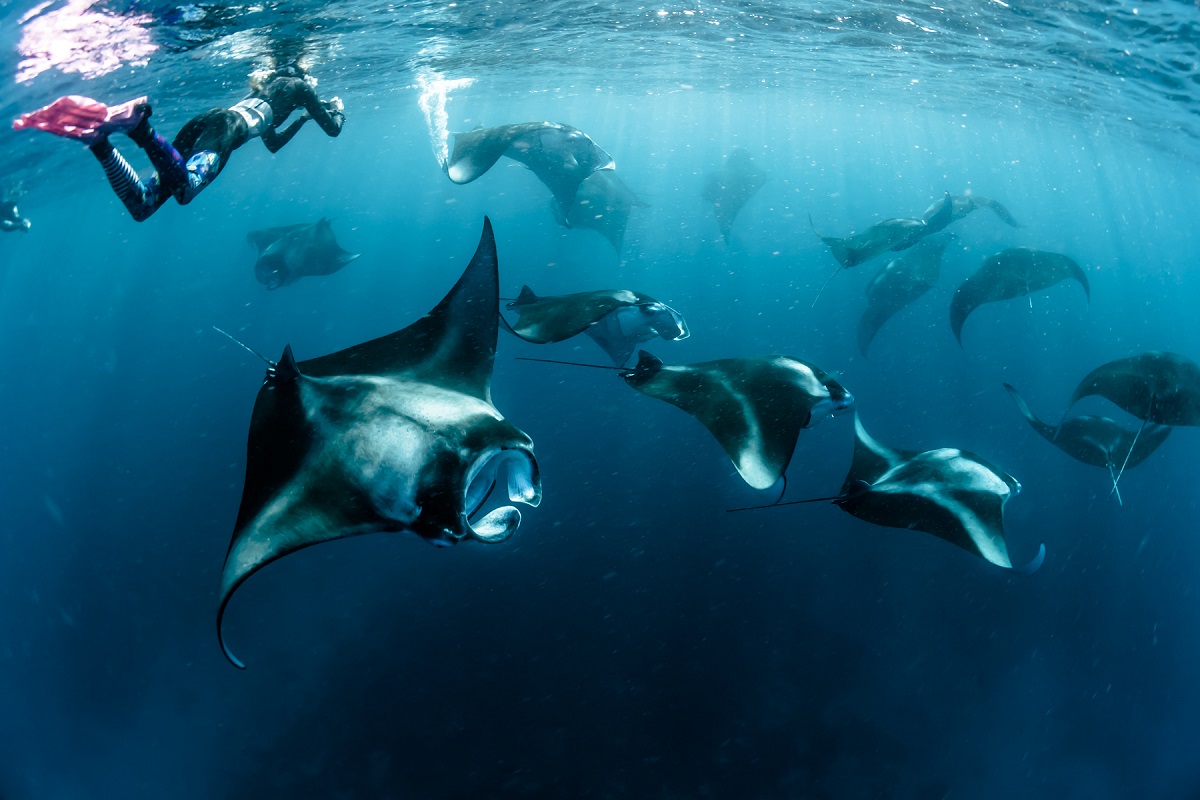
The defining quality is density rather than size. You are not hanging in the blue waiting for one big animal to appear; you are on a reef where every square metre is occupied. Schooling barracuda and jacks, grey reef and blacktip sharks, the wobbegongs that Raja Ampat is known for, turtles, mantas at their cleaning stations, and some of the best macro diving anywhere — pygmy seahorses, nudibranchs, and octopus on almost every dive.
Current is part of the deal. The channels between the islands move water hard, and the best sites are the ones that catch it. That is what feeds the reef, and it means most operators want divers with reasonable buoyancy and some drift experience.
| Site | Known for | Level |
|---|---|---|
| Cape Kri | The species-count record holder. Wall of fish, sharks, sheer volume. | Improver upwards, current |
| Sardine Reef | Dense schooling fish in blue water. The classic Dampier Strait dive. | Improver upwards |
| Melissa’s Garden | Hard coral in near-perfect condition. Gentler, and beautiful. | All levels |
| Manta Point | Reef manta cleaning station. Sit still and wait. | All levels |
| The Passage | A narrow channel between islands that dives like a river. Unique topography. | Confident divers |
| Mike’s Point | Dramatic structure, big fish action when it runs | Experienced |
When to go
October to April is the season. Water sits at around 27°C all year, so the calendar is about wind and rain rather than temperature. May to September brings more of both, and while diving continues, crossings get bumpier and some of the more exposed sites become unreliable.
Within the season, the tail end (February to April) tends to be the calmest, and manta activity is generally strongest from December through March. If you are going once and want the best odds, that window is the one to aim at.
Getting there is the part people underestimate
Raja Ampat is remote, and honestly so. From the UK you are looking at flights to Jakarta or Makassar, an onward domestic flight to Sorong, and then a boat transfer. Allow the best part of two days each way, and build in a buffer night on the outbound — a missed domestic connection is the most common way a Raja Ampat trip goes wrong.
There is also a marine park entry fee payable on arrival, which funds the ranger patrols and the no-take zones that keep the reefs in the condition they are in. Indonesian visa requirements for UK passport holders are straightforward but do change; we confirm the current position when we quote rather than leaving you to find out at the airport.
None of this is a reason not to go. It is a reason to give the trip ten days minimum — a week does not survive the travel.
Where to stay
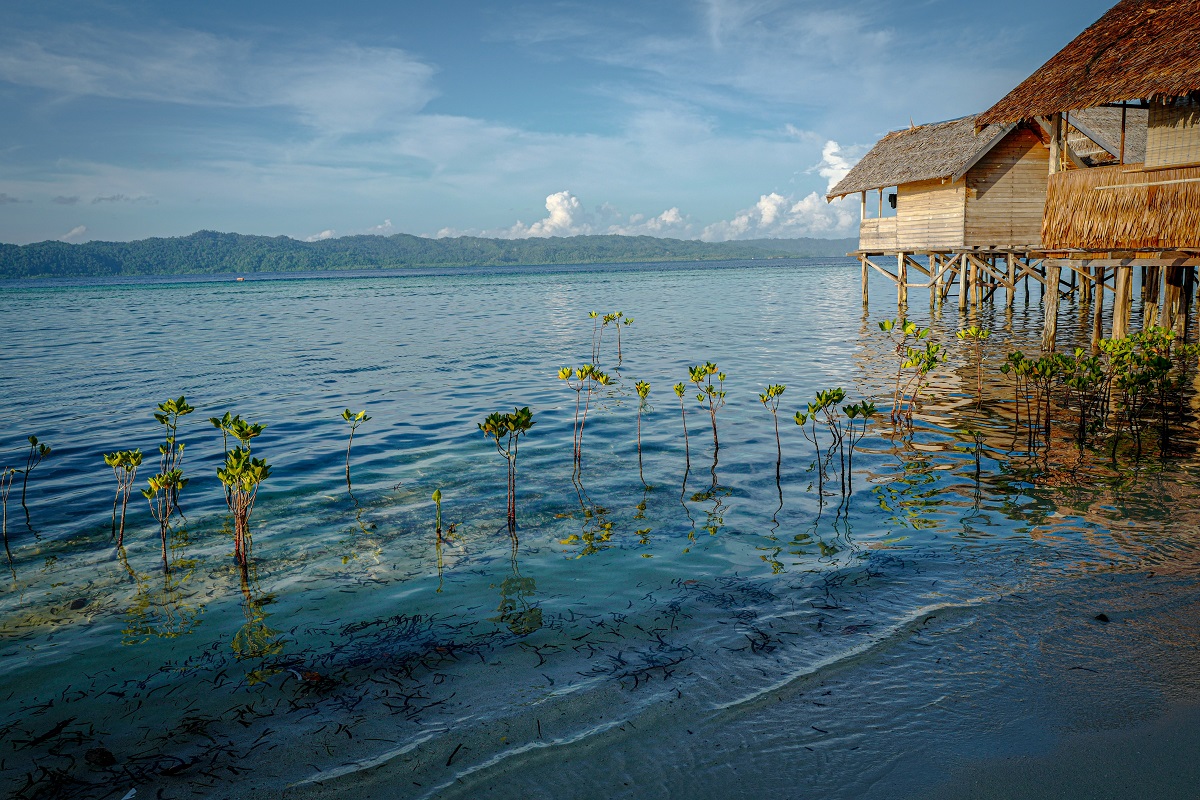
Papua Paradise Eco Resort sits on Birie Island with over-water bungalows and a house reef you can dive straight off the jetty. It is the more traditional eco-resort experience, and the jetty dive alone is worth a night’s stay.
Meridian Adventure Club is the more polished option, with a well-run on-site dive centre and modern kit, aimed at divers who want the comfort without giving up the reef access.
Both are on our Raja Ampat diving holidays page, along with what the diving is like from each rather than what the brochures say. Liveaboards also work extremely well here and reach the southern islands that resorts cannot — worth asking about if you want to see the archipelago rather than one corner of it.
Who it suits
Raja Ampat rewards divers who have dived elsewhere and want to understand why people talk about it differently. If you have twenty logged dives, reasonable buoyancy and a tolerance for long travel, you will have the trip of your life. If you are newly qualified, or travelling with someone who does not dive and expects a resort town, it is the wrong choice — and Indonesia has better options for that in Bali and Komodo.
For how Raja Ampat compares against eleven other destinations on season, cost and who each suits, see the best scuba diving holidays for 2026.
Frequently asked questions
When is the best time to dive Raja Ampat?
October to April. Water is around 27°C year round, so the season is governed by wind and rain rather than temperature. February to April is usually calmest, and manta activity is strongest from December to March.
Is Raja Ampat suitable for beginner divers?
Not ideally. Many of the best sites run current and most operators expect some drift experience and solid buoyancy. Around twenty logged dives is a sensible minimum; there are gentler sites for the rest of the group.
How do you get to Raja Ampat?
Fly to Jakarta or Makassar, connect to Sorong in West Papua, then transfer by boat. Allow close to two days each way from the UK and build in a buffer night on the way out.
What will I see diving in Raja Ampat?
More than 3,000 fish species have been recorded in the archipelago. Expect schooling barracuda and jacks, grey reef and blacktip sharks, wobbegongs, turtles, reef mantas at cleaning stations, and exceptional macro including pygmy seahorses.
How long should a Raja Ampat trip be?
Ten days minimum, and two weeks is better. The travel takes up so much of a shorter trip that a week leaves you barely five days of diving.
Raja Ampat is a trip worth planning properly.
Two flights, a boat, a marine park permit and a season that matters — this is not a destination to book on a whim. Tell us when you can travel and how much diving you have done, and we will build the itinerary around the connections rather than leaving you to make them work.
Free, with no obligation and no booking fee. We’re a UK tour operator, trading since 2001 —
every resort and liveaboard we sell has been dived by one of our own team.
Mon–Sat, 09:30–18:00 UK · 5★ on Google from 190+ reviews ·
ATOL protected (T7314) and Travel Trust Association members.