Bali suits divers who want variety rather than one perfect house reef. Mola mola come up off Nusa Penida in the cold upwelling of roughly July to October, reef mantas patrol Penida’s south coast year-round, and the Liberty wreck at Tulamben is a shore dive. Most people split the trip between two bases.
When to go, and what the season actually changes
Bali is dived all year, so the question is not whether the diving is on but which Bali you are booking. The dry season runs roughly April to October and the wet November to March, but the more useful split is geographic. The north and east coasts are sheltered and calm. The channel between Bali and Nusa Penida is not: it is where cold, nutrient-rich water pushes up from the deep, and that drives most of what people come for.
In the dry months the channel is at its most productive and its coldest. That is mola season – plankton thickens, visibility drops even as the animal life improves, and the thick suits come out. In the wet months the water is warmer, Penida often clearer and the boats quieter, but the sunfish are gone. Neither half of the year is a write-off, which is why Bali diving holidays work as well in February as in September: a different trip, not a worse one.
One local date is worth knowing: Nyepi, the Balinese day of silence, usually in March. The island stops for a full day, airport included – hotels stay open, but nobody dives.
Mola mola season off Nusa Penida, and the cold that comes with it
Sunfish rise from deep water to be cleaned on the reef when that cold upwelling arrives, roughly July to October, with the strongest odds in August and September. Crystal Bay is the site everyone names, though sightings happen along much of the Penida wall. It is never guaranteed, and an operator who promises otherwise is selling something we would not.
What people underestimate is the temperature. Most of Bali sits in the mid-to-high 20s°C. In the channel in season you can drop through a thermocline into the high teens, sometimes lower, and it arrives in seconds. A 5mm suit with a hood is the sensible minimum, and hire kit is often thinner, so tell us before you travel.
Current is the second honest warning. Penida is drift diving with real water movement, occasional down currents at Crystal Bay, and entries that must be prompt. We would not put a diver with fifteen logged dives on that site in September. If your certification is recent, build up on the calmer sites first.
Where the mantas are, and why the site sometimes closes
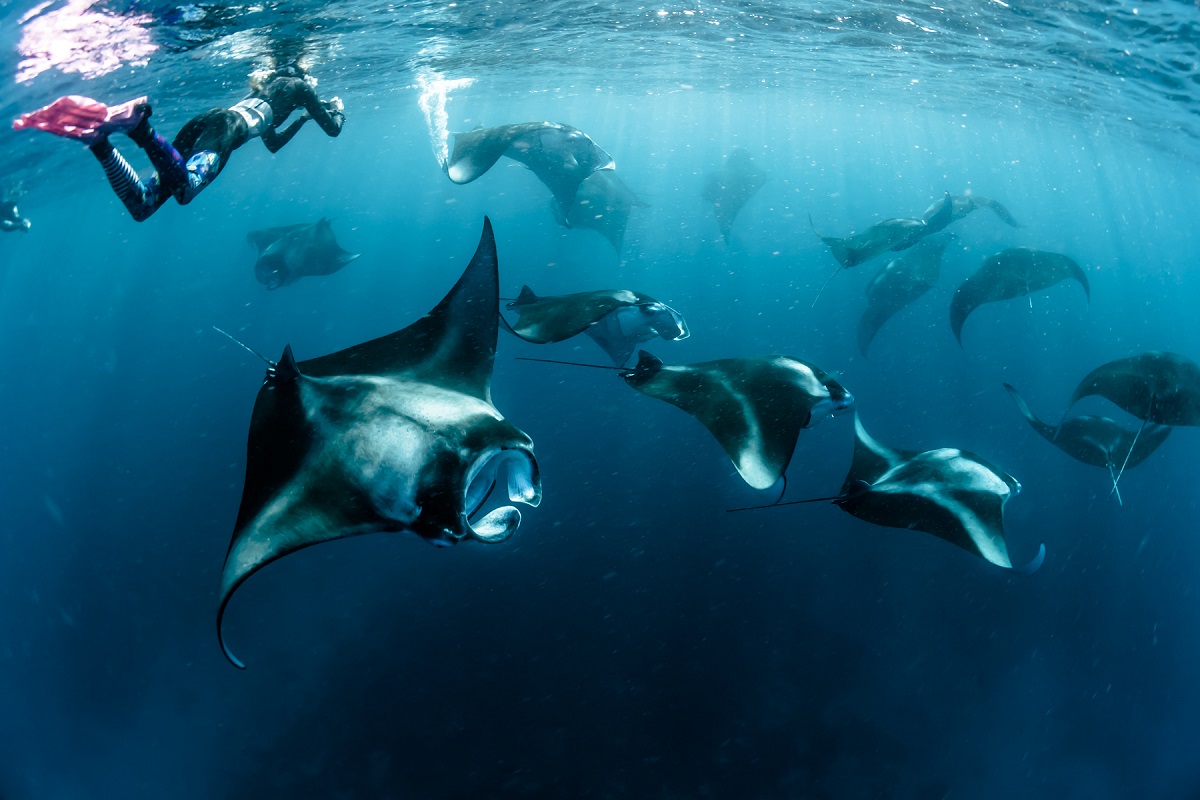
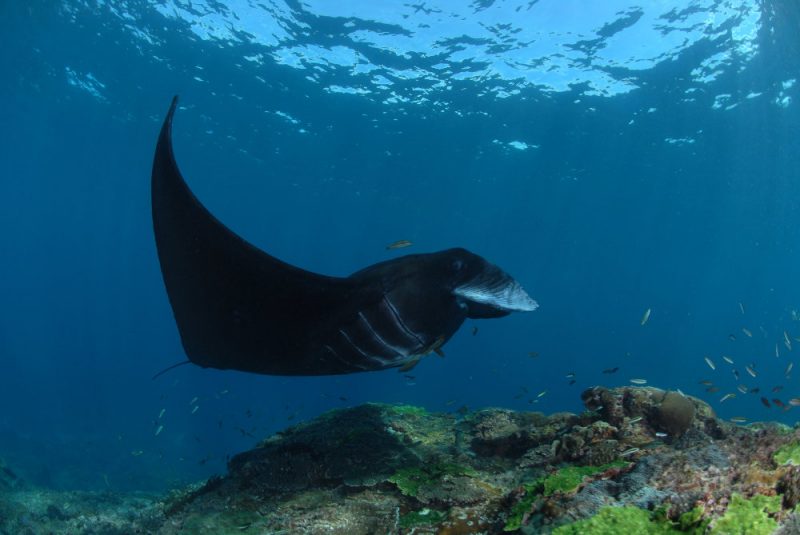
Reef mantas are resident along Penida’s south coast and turn up in any month, a more reliable draw than the sunfish. The cleaning stations sit shallow, so you spend a long, unhurried dive watching them circle rather than chasing something deep. Snorkellers usually see them too.
The catch is exposure. Those sites face open ocean and take swell straight on. On a lively day you get surge, green water and a boat ride some would rather forget, and sometimes the site is called off. Boats run early for that reason, and the water is cooler and murkier than on the sheltered north side.
Shore diving the Liberty wreck at Tulamben
The USAT Liberty was torpedoed in 1942, beached on the north-east coast, and pushed off the sand into the sea when Mount Agung erupted in 1963. It lies broken up parallel to the shore, from a few metres down to around 30, close enough that you kit up on black volcanic stones and walk in.
That is the point of Tulamben: no boat, no departure time, no crossing. You can dive it before breakfast, again mid-morning and again after dark, and each pass is different: bumphead parrotfish are often around at first light, the hull fills with people later, and after dark it belongs to other animals. The same beach gives you the Coral Garden and the Drop Off.
The trade-off is the journey. Tulamben is the better part of a morning from the southern resorts, on winding roads. Doing it as a day trip is possible and slightly miserable; two or three nights is how it is meant to be done.
Which base suits which trip
| Base | Diving | Conditions | Entry | Who it suits |
|---|---|---|---|---|
| Sanur, Lembongan or Nusa Penida | Mola mola in season, reef mantas year-round, drift walls | Strong current, the coldest water on the island | Day boat, brisk descents | Confident divers after big animals |
| Tulamben and Amed | The Liberty wreck, coral gardens, macro at Seraya | Usually gentle, some surge on windy days | Walk in from a stone beach | Wreck and photography trips, high dive counts |
| Padang Bai and Candidasa | Sheltered bays inshore, sharper reefs offshore | Calm in the bays, current on the outer sites | Short boat rides | Courses, refreshers, mixed-ability groups |
| Menjangan and the north-west | Steep walls, sea fans, usually the clearest water in Bali | Mild and sheltered most of the year | Short boat from the mainland | Divers who want visibility, not adrenaline |
Most trips we book use two: an island or southern base for the big animals, then east to Tulamben or Amed for wreck and macro days. With non-divers or children along, those bases give you more to do on a surface day, worth weighing when you plan family dive holidays. Padang Bai is where a lot of course work happens, so it suits a party where someone is learning to dive. Splitting a week that way is how most of our diving holidays in Bali are built.
Using Bali as a base for the rest of Indonesia
Bali’s quiet advantage is being the front door to the rest of the country. Komodo is a short domestic hop to Labuan Bajo; Raja Ampat a longer haul via Sorong, usually with an overnight connection. Alor and the Banda Sea are liveaboard country, and some itineraries begin or end in Bali, saving a set of internal flights. The wider diving in Indonesia pages set out what connects to what.
Two practical points. Leave a clear day between your last dive and the flight home, and remember Bali’s roads climb over hills, so an inland drive after diving is not neutral. Build slack into domestic connections too: a missed link at the start of a liveaboard costs you the boat.
Who this isn’t for
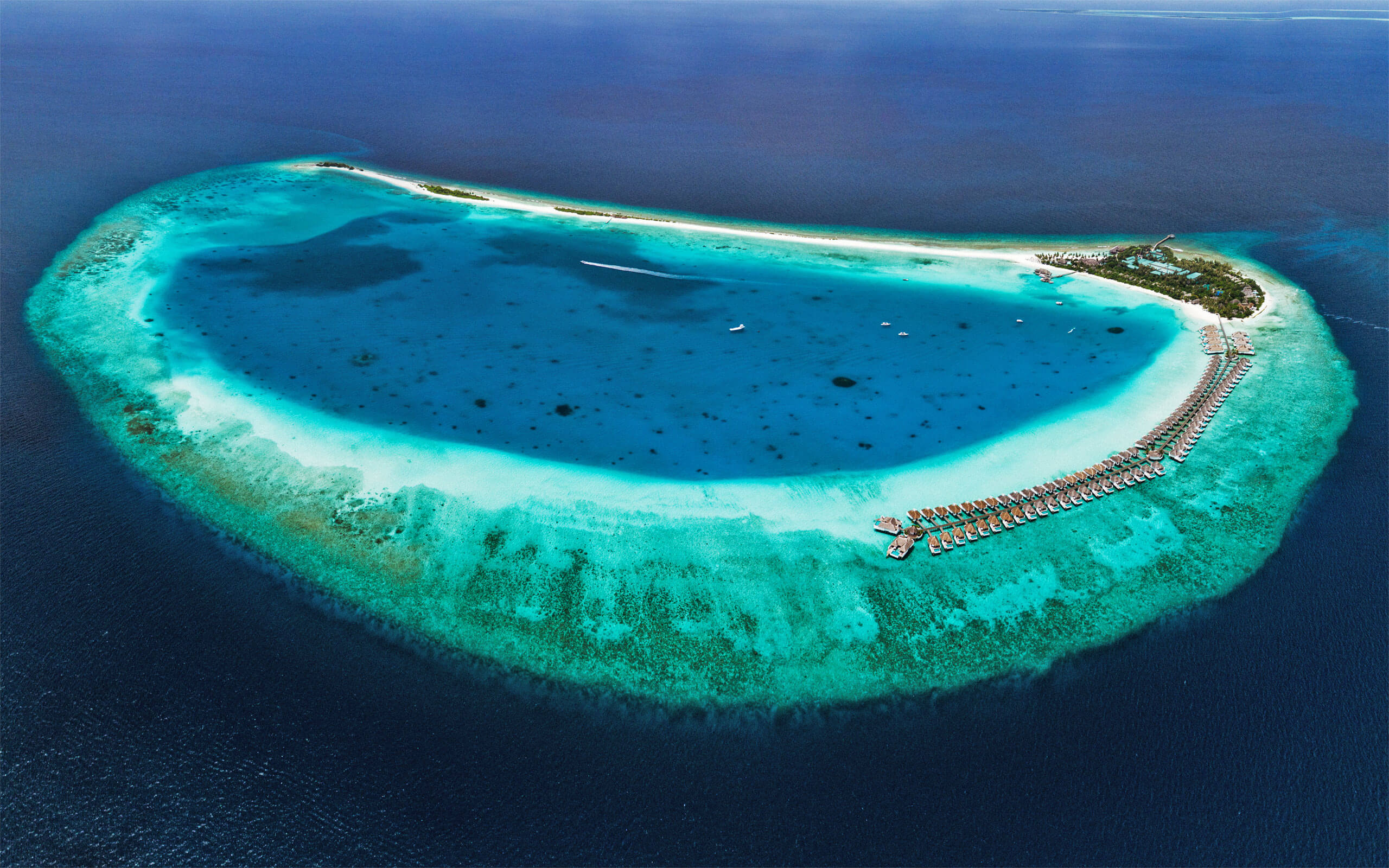
If your idea of a diving holiday is warm, clear, current-free water and a house reef you can swim to, Bali will frustrate you. The best sites here ask for a boat ride, a thermocline, or both. Bonaire does relaxed shore diving far better: you drive to the site, walk in, and nothing about it is strenuous. If you want big animals in warm water, the Maldives gives you mantas and reef sharks without a hood.
If it is the wreck that appeals rather than Indonesia, think hard before flying that far for one hull. Marsa Alam and the Red Sea sit a fraction of the flying time away, with more wrecks and no thermoclines to plan around. And if you are nervous in current, say so when you enquire. We would rather move you elsewhere now than have you back out on a mooring line at Crystal Bay in September.
Frequently asked questions
When is mola mola season in Bali?
Roughly July to October around Nusa Penida, with the strongest odds usually in August and September. The sunfish rise from deep water when cold upwelling pushes into the channel, so the season follows the cold rather than the calendar. Sightings are never guaranteed on any given dive.
How cold is the water around Nusa Penida in mola season?
Most of Bali sits comfortably in the high 20s Celsius, but in the channel during mola season you can drop through a thermocline into the high teens and sometimes lower, and it arrives in seconds. A 5mm suit with a hood is the sensible minimum, and standard hire kit is often thinner than that.
Can you see mantas in Bali all year round?
Reef mantas are resident along the south coast of Nusa Penida and turn up in any month, which makes them a more dependable sighting than the sunfish. The limit is swell rather than season. Those sites face open ocean, so boats run early and the site is occasionally called off.
Do you need a boat to dive the Liberty wreck at Tulamben?
No. The wreck lies parallel to the shore, from a few metres down to around 30 metres, so you kit up on the black stone beach and walk in. That is why divers base themselves at Tulamben for a few nights and dive it before breakfast, again mid-morning and again after dark.
Is Nusa Penida suitable for newly qualified divers?
Some of the calmer Penida sites are, with a good guide. Crystal Bay in mola season is not. It is drift diving with real water movement and occasional down currents, and entries have to be prompt. With only a handful of dives logged, build up gradually or spend the week on Bali’s east coast instead.
Talk to someone who has dived Nusa Penida in mola season
Tell us which months you can travel and how many dives you have logged, and we will say straight whether Bali fits that trip and how to split the week between bases. If it does not fit, we will tell you and point you somewhere that does.
Free, with no obligation and no booking fee. We’re a UK dive tour operator, trading since 2001 —
every resort and liveaboard we sell has been dived by one of our own team. Mon–Fri, 09:00–18:00 UK ·
ATOL protected (T7314) and Travel Trust Association members.