Malta and Gozo are one of Europe’s most concentrated wreck-diving destinations: purpose-scuttled ships, tugs and patrol boats sitting mostly between 20 and 40 metres, most of them reachable from the shore, in clear Mediterranean water a little over three hours from the UK. Diving runs year-round, with the warmest and calmest conditions from roughly June to October.
Why the wrecks are the reason to come
Malta has spent three decades sinking ships on purpose. Redundant tugs, ferries and patrol boats have been stripped and put down in chosen places, giving the islands a set of sites most coastlines would need a century of accidents to accumulate. At Ċirkewwa on Malta’s northern tip, the tug Rozi and the patrol boat P29 lie a short swim from each other and from a natural reef and arch. Off Wied iż-Żurrieq in the south, the tanker Um El Faroud is the largest – long enough that you take a section of her per dive, and now in two pieces after winter storms broke her back. Off Gozo at Xatt l-Aħmar, retired passenger ferries including the Karwela and the Cominoland went down close together, so two wrecks from one entry is normal.
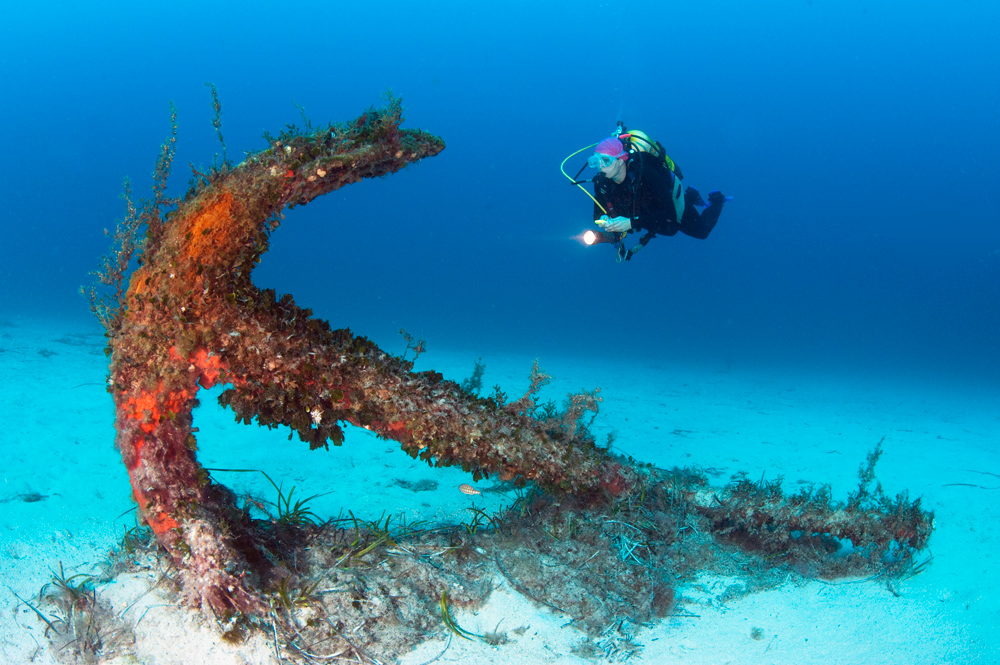
It adds up to a particular kind of diving: steel structures with railings, holds, propellers and open decks, softened by two or three decades of sponge and algae and occupied by bream, damselfish and the odd grouper. Buoyancy matters more than fitness. Most of the genuine war losses – submarines, aircraft, liners – sit well beyond recreational limits, which is why the islands have a serious technical scene, but they are not an ordinary week’s diving. Our Malta diving holidays pages set out which centres we book and where each puts you relative to the wrecks.
When to go, and what the water is doing
Malta dives all year; what changes is comfort, not availability. Water temperature runs from roughly 15 to 16°C in late winter and early spring, up to the mid twenties by late August and into September. The sea lags the air by about a month, which is why September and early October are the weeks we push hardest: warm water still, cooler land, thinner crowds. July and August are hot, busy and pricier, and the popular shore entries can feel like a car park by mid-morning.
Winter diving here is real diving, not a consolation: many centres stay open, visibility is often superb and you will have sites to yourself. You want a drysuit or a good semi-dry, and a north-easterly blowing hard can close half the coastline for two or three days.
Visibility is the quiet argument for the Mediterranean. There is very little river runoff and not much plankton, so 20 to 30 metres is ordinary and a settled autumn day can be better still. Wind direction, not season, decides where you dive: the archipelago has coast facing every direction, so a competent centre drives to the sheltered side.
Why almost everyone dives from the shore
Malta and Gozo have a shore-diving culture in the way that Bonaire does. The good sites are at the bottom of a set of steps. Centres run vans, you kit up on the tailgate, walk down a purpose-built stairway, and you are on the wreck five minutes later.
The upside is considerable: no six o’clock boat, no seasickness, three dives a day if you want them, and a cost per dive low enough to make a fortnight sensible. The cost is physical. You carry a full set of kit over rock and back up those steps at the end, sometimes into a bit of swell, and for many that is the hardest part of the day. Boats still matter – Comino’s caverns and several of the better Gozo sites are boat access – but a Maltese dive week is mostly land-based, and that shapes what you pack and what you spend.
Malta, Gozo or Comino: which island suits you
| Island | What the diving is like | Suits | The catch |
|---|---|---|---|
| Malta | Widest spread: the Ċirkewwa wrecks and reef, the big tanker in the south, caves and sheltered shallows | A first visit, mixed-ability groups, non-diving partners, learning to dive | Traffic and crowds in high summer; famous entries busy by mid-morning |
| Gozo | Scuttled ferries at the deep end of recreational limits, plus the best geology: tunnels, chimneys, the Blue Hole at Dwejra | Experienced divers, photographers, anyone who wants quiet evenings | Short bottom times on the deep wrecks; everything arrives by ferry |
| Comino | Caverns, swim-throughs and bright, shallow, very clear water rather than wrecks | A day trip mid-week, and beginners on their first proper dives | Not a base, and summer boat traffic in the Blue Lagoon is heavy |
Most first-timers base on Malta and take a day or two on Gozo; repeat visitors reverse it.
Getting there, and how a week runs
Flying time from London is a little over three hours, with direct flights from a good spread of UK airports. No jet lag, no internal flight, no three-hour transfer – land in the afternoon, dive the next morning. English is an official language, the currency is the euro and cars drive on the left, which removes most of the friction from day one. Gozo is reached by ferry from Ċirkewwa; the crossing takes under half an hour and carries cars.
It is also a forgiving place to bring people who do not dive, or who are about to start. There is plenty to do on land, and the sheltered shallow entries are what an instructor wants, which is why we send so many first-time divers and families here. The diving holidays in Malta we run are costed as tailor-made trips, so a mixed group need not all dive the same week.
Who Malta and Gozo suit
This is a destination for divers who enjoy structure. If you like swimming a deck line, working out what a ship was, or picking your way through a tunnel in limestone, you will get a great deal out of a week here. It rewards buoyancy control, and it is a good place to build towards technical training. It also suits anyone short on annual leave: a long weekend of diving is viable, and a fortnight can cost less than a week of boat diving in the tropics because the diving comes out of a van rather than a hull.
Who this isn’t for
If you measure a dive holiday in animals, Malta will disappoint you, and we would rather say so now than read it in a complaint. The Mediterranean is a quiet sea. There is no coral reef, no reliable big-animal encounter and no guarantee of anything larger than a grouper or a shoal of barracuda. If your list is sharks, turtles, reef walls and warm water, the Red Sea delivers all of it, two hours further away – look at Marsa Alam instead. If it is wrecks and marine life you want in one trip, an Egyptian liveaboard covers the northern wrecks and the reefs in a week.
Two other honest exclusions. If your back, knees or shoulders are unreliable, think carefully about the shore entries; they are the reason people come home tired. And if what you actually want is a Mediterranean holiday in which diving is one thread among food, landscape and wine rather than the whole point, Italy does that better than Malta does.
Frequently asked questions
Is Malta actually good for wreck diving, or is it overrated?
It is good, with one caveat worth knowing before you book: most of the well-known wrecks were scuttled deliberately as artificial reefs rather than lost at sea. That works in a recreational diver’s favour. They sit upright in chosen positions, mostly between 20 and 40 metres, and several are a short swim from a set of purpose-built entry steps. The authentic war losses lie deeper and belong to technical divers.
When is the best time of year to dive Malta and Gozo?
September and early October for most people. The sea lags the air by roughly a month, so it is at its warmest just as the summer crowds thin out and conditions settle. June and July are reliable but hotter and busier on land. Diving continues all winter with cooler water, often excellent visibility and more days lost to wind.
How cold does the sea get in Malta?
Roughly 15 to 16 degrees Celsius at its coldest, in late winter and early spring, rising to the mid twenties by late August and September. Most visitors dive a 5mm wetsuit in high summer and move to a semi-dry or a drysuit through the cooler months. Malta is not a shorty-and-shorts destination outside the peak of the season.
Do you have to shore dive in Malta, or can you dive from a boat?
Both are available, but the culture is shore-based and most centres build the week around van transfers and purpose-built entry steps. Boats are used for Comino, for several of the better Gozo sites and for the deeper wrecks. If carrying a full set of kit over rock and up steps is a problem for you, tell us when you enquire and we will point you at operators who run more boat days.
Should I base myself on Malta or on Gozo?
Malta if it is your first visit, if the group is mixed in ability, or if non-divers are coming, because it has the widest spread of sites and far more going on. Gozo if you are experienced and want quieter diving, better underwater geology and the deeper scuttled ferries. A lot of people do both, since the ferry crossing takes under half an hour and carries cars.
Not sure whether Malta or Gozo suits your diving?
Tell us your certification level, the month you can travel and what you want out of the week, and we will tell you honestly whether these islands are the right call or whether your money goes further somewhere else. We have dived these sites ourselves, and there is no booking fee.
Free, with no obligation and no booking fee. We’re a UK dive tour operator, trading since 2001 —
every resort and liveaboard we sell has been dived by one of our own team. Mon–Fri, 09:00–18:00 UK ·
ATOL protected (T7314) and Travel Trust Association members.