Mozambique’s best-known diving is at Tofo, where reef manta rays visit cleaning stations through much of the year and whale sharks are a southern-summer bonus rather than a promise. Boats launch through the surf, the reefs sit deep, and conditions change daily. The Bazaruto archipelago further north is gentler and lodge-based. Expect big animals rather than easy diving.
What the diving is actually like
There is no jetty at Tofo. The boat is a rigid inflatable sitting on the sand, you help push it into the water, climb on, take hold of the rope, and the skipper picks his moment through the shore break. It is loud, wet and over in a minute or two. Most people enjoy it once they know it is coming. Some never do, and it is worth being honest with yourself about that.
The ride out is twenty minutes to the best part of an hour, sitting on the tubes, finishing with a backward roll and a purposeful descent. Most of Tofo’s well-known sites sit roughly between 18 and 30 metres, which shortens no-decompression time and means one dive per outing rather than two. Surge and current turn up regularly. Visibility swings from a few metres of green soup to clear water, and the green days are often the good ones: the plankton is why the big animals are there.
The coral is not the point. This coast has nothing like the hard coral architecture of the Red Sea or Indonesia. What it has is volume of large life: mantas queuing at cleaning stations, potato bass, kingfish, big rays, the occasional bull shark along the deeper edges, and in midwinter the sound of humpbacks somewhere out of sight. You go for the encounter, not the reef.
Tofo or Bazaruto: which base suits you
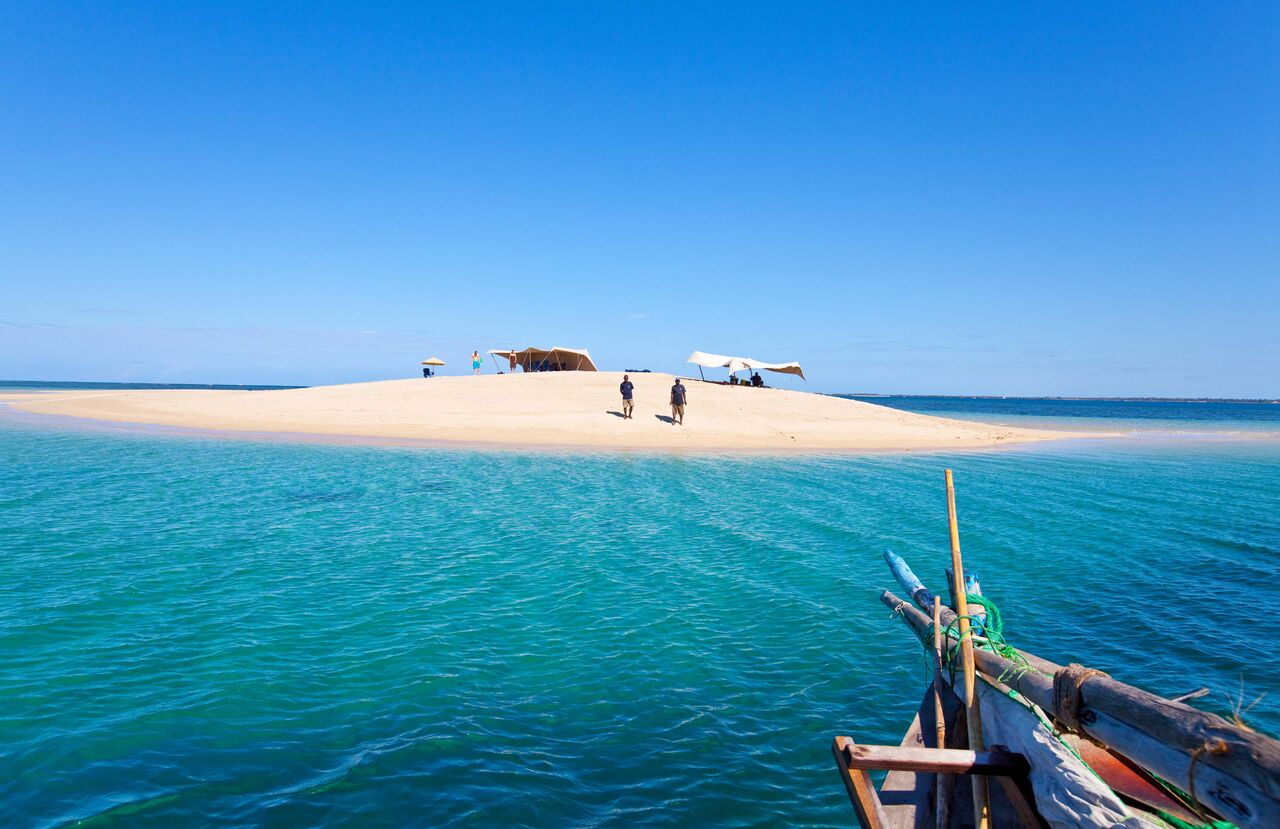
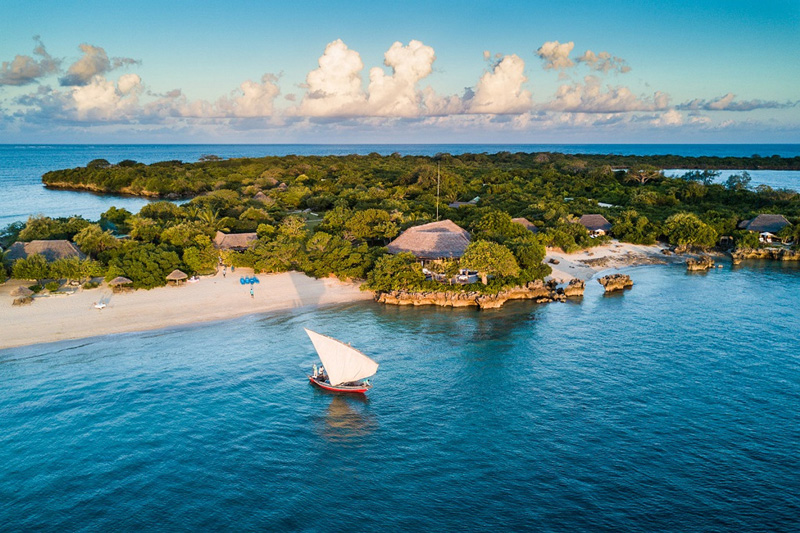
These are two quite different holidays, and the base matters more than the choice of dive centre. Tofo is a beach village in Inhambane province: simple lodges, a long research presence – the Marine Megafauna Foundation has studied mantas and whale sharks from here since the 2000s – and diving that is entirely about big animals. The Bazaruto archipelago, a few hundred kilometres up the coast off Vilankulo, is a national park of sand islands and turquoise channels, with lodge boats, calmer access and plenty for anyone not diving. Both sit on our Mozambique diving holidays, and a fair number of clients combine the two.
| What matters | Tofo | Bazaruto archipelago |
|---|---|---|
| Getting on the boat | Surf launch off the beach, everyone pushes | Lodge boats and sheltered channels, no shore break |
| Typical dive | Deeper reefs, roughly 18–30 metres, one per trip | Reef and channel diving, much inside 20 metres |
| What you are there for | Manta cleaning stations, whale sharks, humpback season | Reef fish, big schools, the region’s last dugong stronghold, rarely seen |
| Conditions | Surge, current and cancelled days are normal | Tide-driven, generally more forgiving |
| Where you sleep | Beach lodges and guesthouses, casual | Island lodges, considerably more comfortable |
| If someone is not diving | Surf, ocean safaris, not a lot else | Dhow sailing, sandbanks, dunes, fishing |
| Best for | Experienced divers who came for the animal | Mixed groups, couples, families |
When to go, and what each season gives you
There is no single best month here, only trade-offs. The southern winter, roughly June to September, brings cooler water, low to mid twenties and colder at depth, more wind on some days, humpback whales in the channel, with calves later in the season, and the most consistent manta activity of the year. Take a 5mm suit and a hooded vest; people underestimate how cold a 30-metre dive feels in August.
The southern summer, roughly November to March, warms the water into the high twenties and is when whale sharks are most often reported. It is also the wet season, with real cyclone risk from roughly November to April, which can mean days of heavy weather and no diving. The shoulders either side – April to May, and October into early November – are the quiet compromise, and what we tend to suggest when asked to choose.
Manta rays and whale sharks: what is realistic
Mantas are the more dependable of the two. Reef mantas use fixed cleaning stations off Tofo and are seen in most months, with the winter usually strongest. When it works, you settle in the sand at the edge of a bommie and watch several animals circle above you for most of the dive.
Whale sharks need a plainer warning. Sightings around Tofo have fallen a long way since the mid-2000s, and research from this coast documents that decline. They are still seen, but nobody should book on the assumption of one, and encounters usually happen on snorkel from an ocean safari boat rather than on scuba. If swimming with a whale shark is the whole reason for the trip, we would rather say so now than have you fly home disappointed. Most people who book Mozambique diving holidays come for the mantas and treat anything larger as a bonus, which is the right way round.
How much travel effort is involved
More than most Indian Ocean trips. Most UK routings go through Johannesburg on an overnight flight, then a regional hop to Inhambane for Tofo or Vilankulo for Bazaruto, then a road transfer or a boat to the islands. Realistically that is the best part of two days door to door each way. Regional schedules are thin, so we build in a buffer night rather than gamble a diving day on one tight connection. Entry requirements have changed more than once recently, so check before booking.
What to sort out before you go
Mozambique is a malaria area: speak to a travel clinic about prophylaxis well ahead, and cover up after dark. Take dive insurance with evacuation cover: you are a long way from a chamber and reaching one is not quick, which argues for conservative profiles and generous surface intervals. Bring your own SMB and reel, and seasickness tablets even if you rarely need them.
On experience, be realistic. We would not send a newly certified diver to Tofo as a first trip abroad; twenty or thirty logged dives, settled buoyancy and some experience of current make the difference between a good week and an anxious one. If you are still starting out, a learn to dive holiday somewhere calmer is the better use of the money, and Bazaruto handles a family dive holiday far better than Tofo does.
Who this isn’t for
If you want warm, calm, dependable diving with a short boat ride, a house reef to potter on and near-certain visibility, Mozambique will frustrate you. Days get blown out. The launch is physical. The best animals are the least predictable part of it.
If that describes you, Marsa Alam does easy, warm and reliable far better, with house reefs and short transfers. If it is mantas you want with less effort, the Maldives puts you on cleaning stations from a comfortable base, no surf launches. If the appeal is East Africa, Tanzania offers warmer water with simpler logistics and gentler entries. We would rather point you there than sell you the wrong week.
Mozambique rewards divers who accept the terms and treat the days when everything lines up as payment for the ones when it does not. If that sounds like your kind of trip, diving in Mozambique is worth the effort.
Frequently asked questions
When is the best time to dive Mozambique?
It depends what you want to see. Roughly June to October is the southern winter: cooler water around 22 to 24 degrees Celsius, humpback whales moving up the channel, and the most consistent manta activity of the year. November to March is warmer, into the high twenties, and the better window for whale sharks, but it is also the wet season and carries real cyclone risk. April to May and October into early November are the quiet compromise.
Are whale sharks guaranteed at Tofo?
No, and we would rather you did not book on that basis. Sightings around Tofo have fallen a long way since the mid-2000s, and encounters usually happen on snorkel from an ocean safari boat rather than on a scuba dive, because the animals are at the surface. Go for the manta cleaning stations and treat anything larger as a bonus.
Is Tofo suitable for a newly qualified diver?
Not . Most of the well-known reefs sit roughly between 18 and 30 metres, the boats launch through the surf off the beach, and surge and current are common. We would want to see twenty or thirty logged dives and settled buoyancy before recommending it. Bazaruto is the gentler of the two bases and works better for mixed-ability groups.
How do you get to Tofo and Bazaruto from the UK?
Nearly everyone routes through Johannesburg on an overnight flight, then takes a regional flight to Inhambane for Tofo or to Vilankulo for Bazaruto, followed by a road transfer or a boat out to the islands. Budget the best part of two days door to door each way, and allow a buffer night, because regional schedules are thin and a missed connection can cost a day of diving.
Do you need malaria tablets for a diving holiday in Mozambique?
Mozambique is a malaria area, so speak to a travel clinic about prophylaxis well before you travel and plan on covering up after dark. Take dive insurance with evacuation cover too: you are a long way from a recompression chamber and reaching one is not quick, which is a good argument for conservative profiles and generous surface intervals.
Thinking about Mozambique? Ask us the awkward questions.
Tell us when you can travel and what you most want to see, and we will say plainly whether Tofo, Bazaruto or somewhere else entirely is the right fit. We have been booking this coast since 2001, we are ATOL protected (T7314), and the team have dived these reefs themselves.
Free, with no obligation and no booking fee. We’re a UK dive tour operator, trading since 2001 —
every resort and liveaboard we sell has been dived by one of our own team. Mon–Fri, 09:00–18:00 UK ·
ATOL protected (T7314) and Travel Trust Association members.