Wreck Diving Micronesia: What Chuuk Lagoon and Palau Really Ask of You
Chuuk Lagoon holds one of the densest concentrations of Second World War shipwrecks in the world, sunk at anchor in February 1944. Many lie below recreational limits, so the full site list needs decompression training. Palau adds walls, sharks and a marine lake, and many divers pair the two.
What is actually down there in Chuuk Lagoon
In February 1944 an American carrier raid caught the Japanese fleet’s forward anchorage inside the lagoon. What went down was mostly the unglamorous half of a war machine – cargo ships, tankers, submarine tenders, a few warships, aircraft – and it went down loaded. The holds still contain trucks, aircraft engines, bottles, tyres and ordnance. This is not an empty hull scuttled for divers; it is a supply chain that stopped mid-sentence.
The lagoon is large and reef-ringed, so the water is usually calm, though the wrecks are spread widely across it. Eighty years of growth means the shallower superstructures carry heavy soft coral rather than bare steel – and the moment a fin touches silt inside a hold, visibility drops to nothing.
Chuuk is part of the Federated States of Micronesia, and the wrecks are the entire reason to go. They are also war graves: remains are present on some ships, artefacts stay where they lie, and operators enforce that.
How deep the wrecks really are, and the training they ask for
Chuuk works in three tiers, and which one you can reach decides the trip.
The shallow tier is recreational. Several of the best-known ships sit upright, masts reaching towards the surface and decks within normal sport-diving depth: a tanker superstructure under soft coral, a hold of aircraft parts, a bow gun you can hang over without your computer complaining. Advanced Open Water, tidy buoyancy and nitrox fill a very good week.
The middle tier is where most people meet the ceiling. Engine rooms, lower holds and intact bridges mean an overhead environment at 30 to 40 metres, with silt, no natural light and a long swim to an exit. That is wreck penetration, not a swim-through: it wants a proper wreck course, redundant lights and a gas plan.
The deep tier is beyond recreational limits, and no amount of enthusiasm changes that. The most celebrated cargo – tanks on deck, trucks and mines in the holds of the deepest ships – lies at around fifty metres and below, on hulls whose seabed is deeper again. That means decompression procedures, helium in the mix for most people, and staged stops. Lagoon operators are set up for it, with nitrox widely available and mixed gas and rebreather support, but sort the training out before you fly.
Hold Advanced Open Water and nothing beyond it and you will miss a fair number of the famous names. That is not a reason to stay at home, just a reason to book knowing it.
Why Palau is the natural second half
Few people fly to Chuuk alone, and the reason is arithmetic: you have already travelled most of the way round the world. A week of diving in Palau costs two more regional flights and turns a wreck pilgrimage into a complete dive holiday.
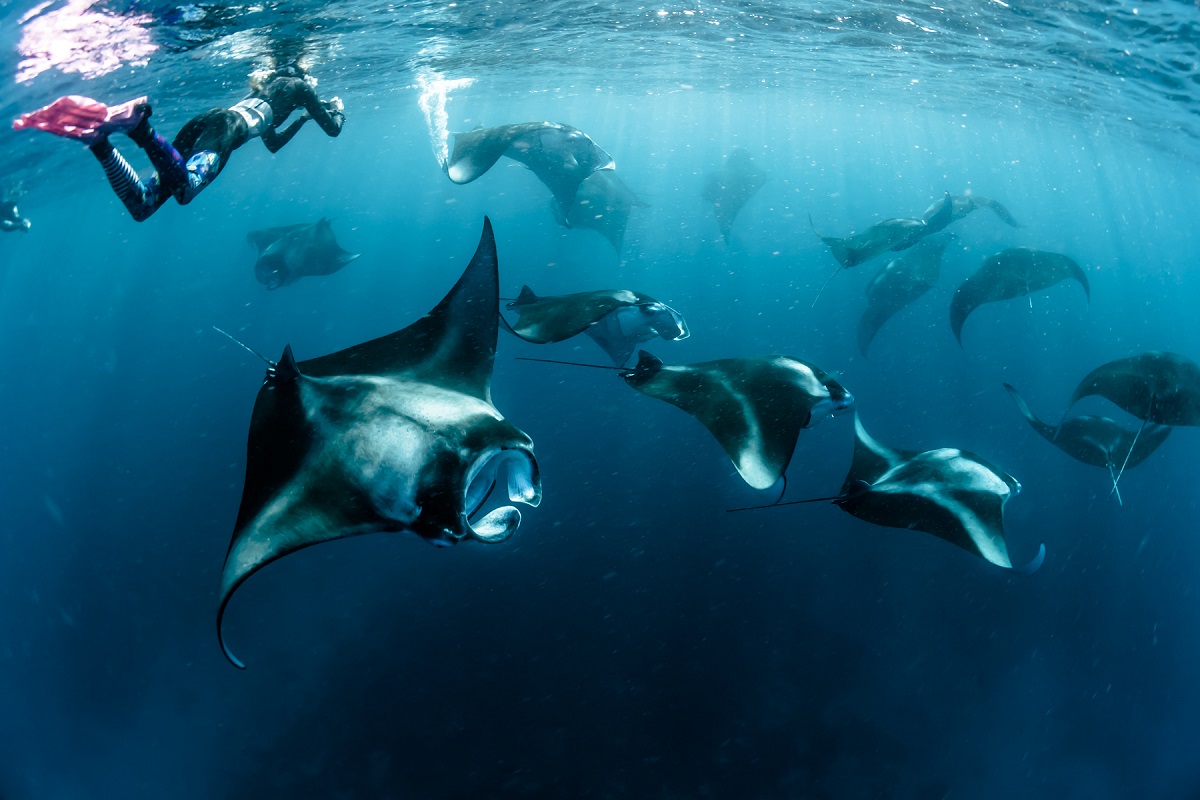
Palau is the opposite sort of diving. Blue Corner is a current-swept reef plateau where divers clip a reef hook into dead rock and hang while grey reef sharks, jacks and barracuda work the edge. The Blue Holes drop through the reef top onto the wall, German Channel has manta cleaning stations, and Ulong Channel is a fast coral-floored drift. Jellyfish Lake, a marine lake in the Rock Islands, is snorkelling only, and its jellyfish numbers have swung considerably in the past decade, so nobody can promise what you will see.
Palau has its own Japanese wrecks too, several inside recreational depths, so a diver locked out of Chuuk’s deep tier still gets a run at wreck diving.
Chuuk or Palau: what each one actually gives you
| Factor | Chuuk Lagoon | Palau |
|---|---|---|
| What you dive | Loaded WWII wrecks, cargo still in the holds | Walls, current channels, sharks and mantas, plus shallower wrecks |
| Typical depths | Masts near the surface, decks around 15m, headline cargo past 50m | Most signature sites in the 15–30m band |
| Training it demands | Advanced Open Water for the shallow tier; wreck and decompression training for the rest | Advanced Open Water, current experience, a reef hook |
| Conditions | Sheltered lagoon, little current, moderate visibility, fine silt inside | Open ocean, strong tidal currents, better visibility |
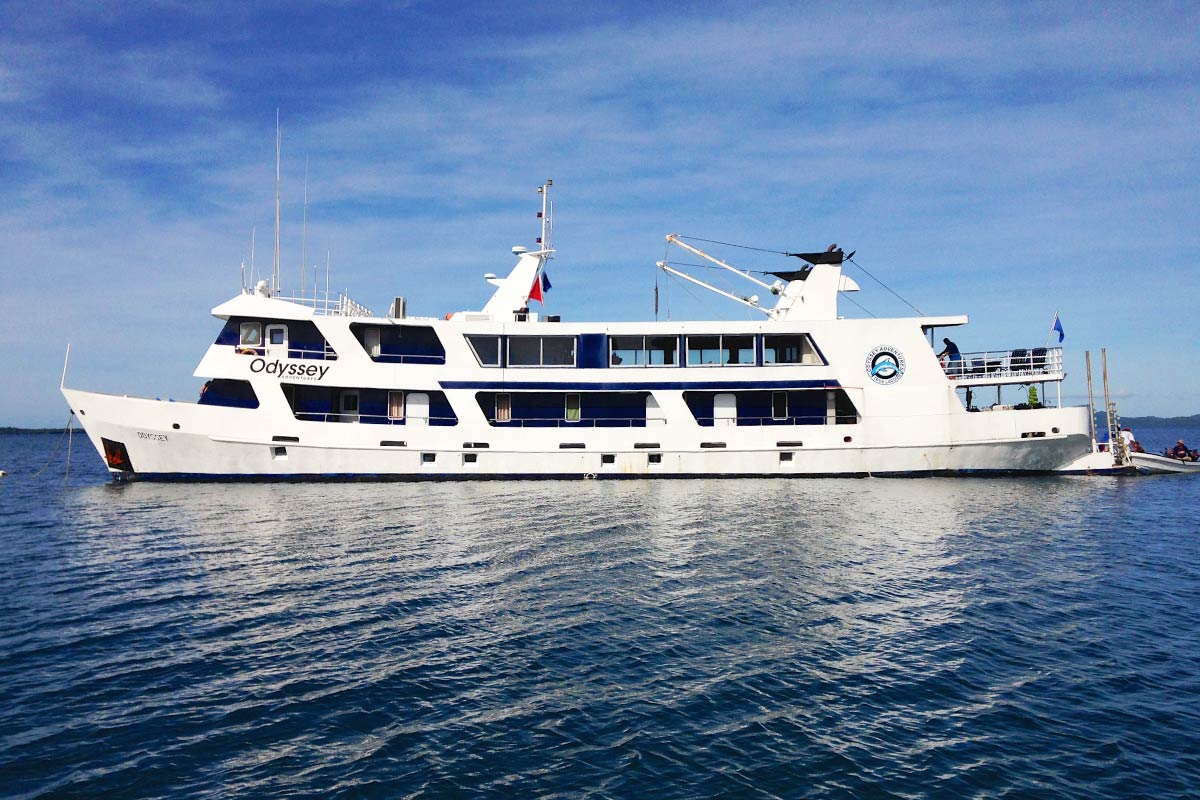
| Where you stay | Weno land-based or liveaboard; few options | Koror day boats or liveaboard; more choice |
| For non-divers | Very little | Rock Islands, kayaking, snorkelling, Jellyfish Lake |
| Reaching it from the UK | Two long-haul legs plus a limited Guam service | Several Asian gateways; easier |
When to go and how long to allow
Both sit close to the equator and dive all year, with water around 28–30°C. The drier, calmer stretch runs roughly December to April, the easier window for Palau’s exposed southern sites around Peleliu, which rough weather cancels. The wetter months, roughly June to October, are still diveable, but expect rain. Current at Blue Corner tracks the tide rather than the calendar, which is why Palau liveaboard itineraries are built around tidal windows instead of a fixed timetable.
Two weeks is the minimum that makes sense and will feel tight: roughly five diving days in each place once travel is deducted. Sixteen to eighteen nights is the version people come home happy from. Bring 3mm, or 5mm for long repetitive days.
What the travel really involves
From the UK, Chuuk means two long-haul legs and then a regional flight, typically through Asia and Guam, with a handful of services into Weno rather than daily flights. Allow the best part of two days each way and an overnight in transit. There is no direct hop between Chuuk and Palau either: you route back through Guam.
Medical facilities out here are basic and evacuation is a long way off, so insurance with real chamber and repatriation cover matters more than usual. Leave a clear day between your last dive and the flight home, more if you have been running decompression. Palau also charges a compulsory environmental fee plus permits for the Rock Islands; when we quote Palau diving holidays alongside Chuuk we build those in, because the flights and the fees are where the surprises live, not the diving.
Who this isn’t for
We would rather say so now. If you want wrecks without the flying, this trip is the wrong shape entirely. A Red Sea liveaboard puts you on the Thistlegorm and the Abu Nuhas wrecks after five or six hours in the air, and Malta offers clear, accessible, purpose-scuttled wrecks on a short-haul weekend. Neither matches Chuuk’s cargo, but both cost a fraction of the time.
If you are newly qualified, go elsewhere first and come back. Chuuk rewards depth control, gas management and buoyancy, and is unkind to divers still thinking about their trim. If it is big animals you want and the history means little, a Maldives liveaboard gives more encounters per day for a fraction of the travel.
And think hard before bringing non-divers or children. Palau can carry a mixed group; Chuuk has very little for anyone not going in the water, and the journey is punishing for young children. Our family dive holidays go to places built for that. This is not one of them.
Frequently asked questions
Do I need technical diving qualifications to dive Chuuk Lagoon?
Not for all of it. Several of the best-known wrecks sit upright with main decks at normal recreational depth, so an Advanced Open Water diver with nitrox has a full week of diving available. But engine rooms and lower holds are overhead environments at 30 to 40 metres, and the most celebrated cargo lies at around fifty metres and below, which needs decompression training. Without it, budget for missing perhaps a third of the famous names.
Can you dive Chuuk Lagoon and Palau on the same trip?
Yes, and most people do, but it has to be planned rather than improvised. There is no straightforward hop between the two; in practice you route back out through Guam. Two weeks is the workable minimum and sixteen to eighteen nights is far more comfortable, which leaves a genuine week of diving in each place once the travel days are taken out.
How deep are the wrecks in Chuuk Lagoon?
They span the full range. Some masts and superstructures reach up towards the surface and several main decks sit at around 15 metres, while the deepest ships hold their cargo at around fifty metres and below, on hulls whose seabed is deeper again. That spread is why recreational and technical divers can share the same boat and dive completely different sites.
Can you scuba dive Jellyfish Lake in Palau?
No. Jellyfish Lake is snorkelling only and a permit is required. The jellyfish population has fluctuated considerably over the past decade, so treat it as a highlight when conditions are good rather than a guaranteed part of the itinerary. Palau also charges a compulsory environmental fee on arrival, separate from the Rock Islands permits.
What is the best time of year to dive Micronesia?
Both Chuuk and Palau dive all year, with water around 28 to 30 degrees Celsius. The drier, calmer stretch runs roughly December to April, which helps for Palau’s exposed southern sites around Peleliu. Roughly June to October is wetter but perfectly diveable, and Chuuk in particular is sheltered inside its barrier reef.
Tell us your certification and we will be honest
Send us your certification level, your dates and how much flying you can stomach, and we will tell you whether Chuuk and Palau is the right trip for you or whether something closer would serve you better. We have been booking dive travel since 2001, we are ATOL protected (T7314) and members of the Travel Trust Association, so your money is covered either way.
Free, with no obligation and no booking fee. We’re a UK dive tour operator, trading since 2001 —
every resort and liveaboard we sell has been dived by one of our own team. Mon–Fri, 09:00–18:00 UK ·
ATOL protected (T7314) and Travel Trust Association members.