



 Nassau



Please wait
GALAPAGOS DIVING HOLIDAYS
GALAPAGOS DIVING HOLIDAYS
GALAPAGOS DIVING HOLIDAYS
GALAPAGOS DIVING HOLIDAYS
GALAPAGOS DIVING HOLIDAYS
Why you'll love diving in Galapagos!
Galapagos diving is the adventure of a lifetime and one of the last places in the world where you can go diving with large schools of hammerheads. It has been said that if when the young Charles Darwin visited the Galapagos he had been diving he may have never left. The Galapagos is the second largest Marine Reserve in the world and though located directly on the equator it’s sits at the convergence of cold water currents from Antarctica and the warm waters of the tropics. Diving in these waters you will discover a unique environment where cold and warm water species coexist. On shore this unique mix of climates is best characterized by Galapagos Penguins living only a few feet away from tropical pink flamingos. The Galapagos are volcanic islands that benefit from equatorial upwelling making it an ideal marine environment. These waters are rich with nutrients. The porous lava rocks provide small fish with the protection they would otherwise receive from a coral reef, which are few and far between in these waters. Galapagos Diving can best be described as spectuacular - home to over 500 species of fish and an impressive number of large animals sea lions, rays, eels and sea turtles are seen on almost every dive. With 27 species including hammerheads and the enormous whale shark diving with sharks is why people come to dive in the Galapagos Islands.
Follow the link for liveaboard diving in Ecuador Galapagos.
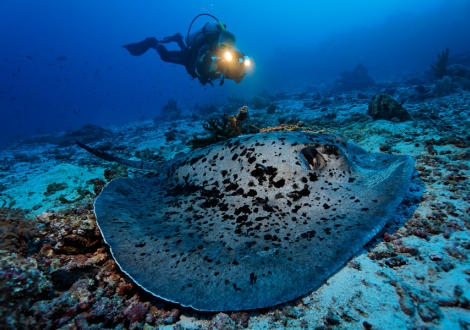
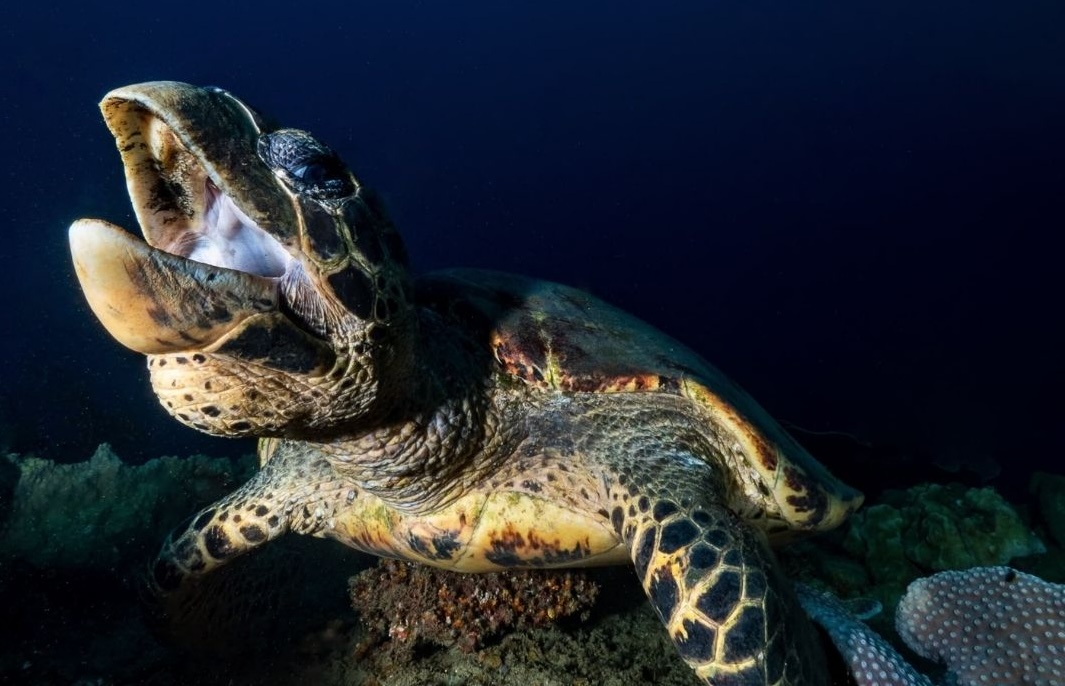
The marine life of the Islands is well documented for being quite spectacular, with Jack Grove and Robert Lavenberg documenting just shy of 450 fish species in 112 different families to be populating Galapagos waters – with a fraction less than 10% of those endemic to the area. As the ocean surrounding the Galapagos is rather deep, there are several species of shark living in large schools around the islands, including: hammerhead, whale shark, white tip shark, thresher shark, requiem shark and Galapagos shark amongst many others. Also found in the cold waters surrounding the Archipelago are many types of ray, eagle ray, manta, Marlin swordfish and even huge sunfish. As well as those giants of the sea, there are also great numbers of other creatures found there, with octopus, lobster, starfish, sea urchin, sponges and many types of anemone adorning the waters surrounding Galapagos. There are only a few species of coral that grow in the Galapagos as the water is so cold, with most of the reefs growing in the sub-tidal zone. However, the coral that does grow there is a true spectacle to visit – and makes for a wonderful range of dives on an extended liveaboard holiday. Particularly interesting dive sites can be found at Devil’s Crown on Onslow Island, Bartolome Island and Champion Island (including Darwin & Wolf Islands)
The best time of year to dive at the Galapagos is generally considered to be between the months of February and June.
You’re most likely to see whale sharks in the warm season (December – May) with around a 50/50 chance on a liveaboard. You can expect to see some of the world’s biggest schools of hammerhead sharks amongst hundreds of other magnificently interesting species whilst diving at the Galapagos.
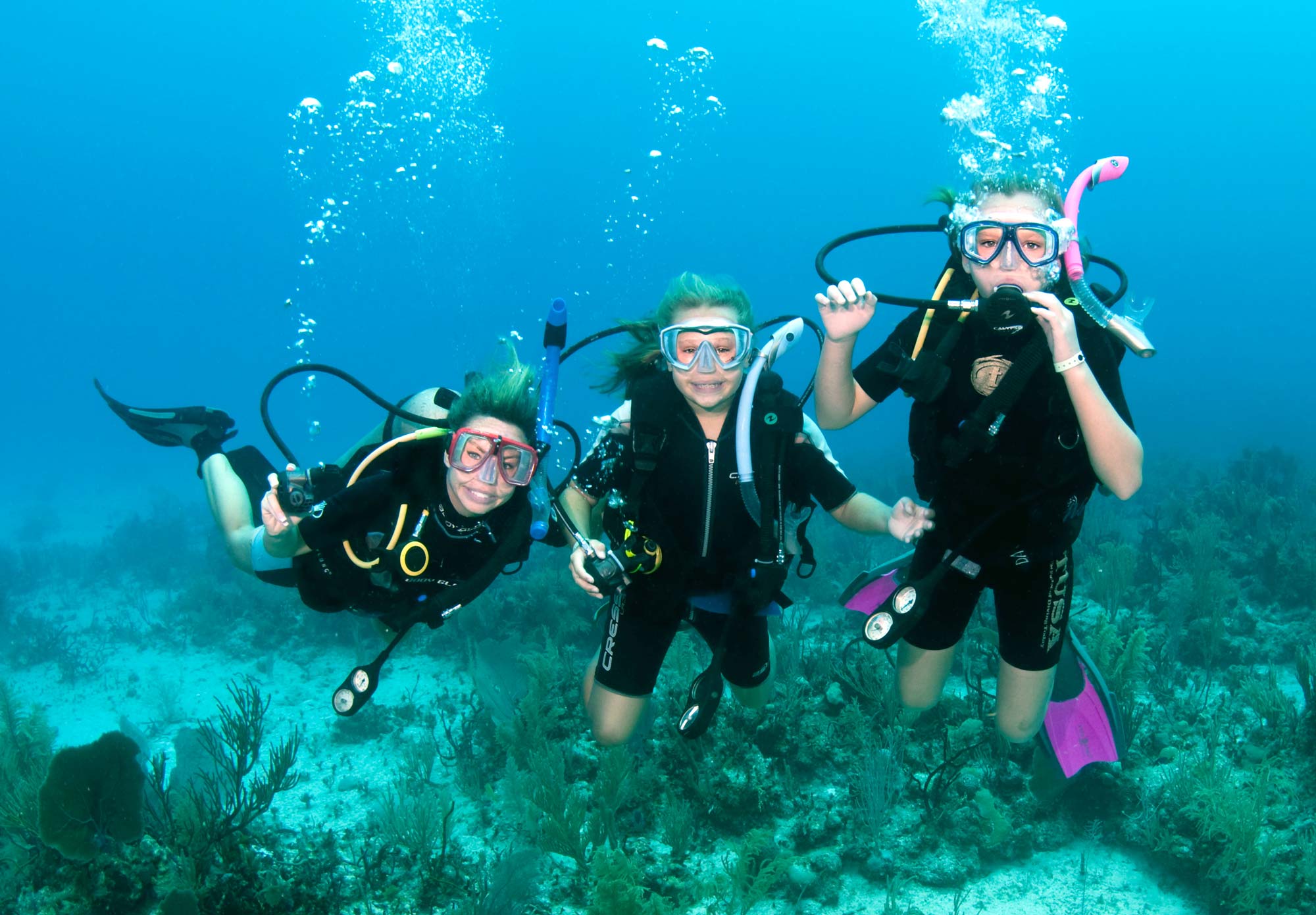
A wet suit thickness of between 5mm and 7mm is generally required for diving Galapagos waters, which quite drastically affects the buoyancy of divers. It is advisable to wear gloves whilst down there, and a hoody to account for the loss of heat through your head. Cold temperatures can often increase breathing rate, so divers must consistently keep a check on the air supply. Divers can experience Thermoclines - with temperature changes of up to 30F in just two or three feet of vertical distance, which is of course a big attraction!
It is very important to perform a careful buoyancy test on your dive equipment in order to determine the proper amount of weight required for the depth of your dive. Visibility in the waters of the Galapagos Islands is generally somewhere between 5m and 30m, depending on the season and currents.
Before your diving in the Galapagos Islands take some time to discover the natural and cultural diversity of Ecuador’s mainland straddling the Equator. In the country’s east the sun rises over the humid eastern jungles of the Amazon, explore the rainforest beneath gigantic trees, paddle dugout canoes, or kayaks, up creeks and rivers, or raft their white waters. Climb observation towers for a close encounter with the forest canopy, haven of monkeys, sloths and screeching parrots.
With the sun at its zenith, you’ll come to understand why it was sacred to the earliest inhabitants of the Andean highlands. The sun shines on the snow-capped volcanoes and green valleys, the cloud-shrouded forests. The two chains of the Andes here became known as the Avenue of the Volcanoes. Ecuador’s capital city, Quito, is found here with its gleaming church facades were named a UNESCO World Heritage Site, less well known Cuenca also received this same recognition. From Quito you can also visit the Equator Monument.
Out in the Pacific to the west lie the Galapagos Islands, the archipelago that inspired Charles Darwin in 1835 and our diving destination in Ecuador.
Advance (10/10), Technical_diver (10/10)
Going on a scuba diving trip to the Galapagos Islands is a dream for many people who love diving. The good news is, because of its location near the equator and its warm tropical climate, any time is a good time for a Galapagos scuba diving vacation. When you choose to go depends on what you want to see. If you want to see schools of hammerhead sharks and Galapagos sharks, which the Galapagos Islands are famous for, you need to go to the remote Wolf and Darwin Islands. These islands can only be reached by a Galapagos liveaboard.
If you don't want to stay on a liveaboard, there are still good options for diving from the land. You can stay on one island or do some island hopping. If you have more time or are travelling with someone who doesn't dive, it's a good idea to spend a few extra days on the main islands like Santa Cruz, Isabella, and Floreana. That way, you can also experience the amazing wildlife of the Galapagos Islands.
The Galapagos diving seasons are split into two: December to May (wet) and June to November (dry). Each season has its own highlights. The latter part of the year, especially from July to October, is considered the best time because there's a good chance to see the magnificent whale shark. However, it can be cooler during these months, and the seas might be a bit rough. You should wear a 5mm to 7mm wetsuit, and if you get cold easily, a dry suit might be more comfortable.
The dry season (June to November) is cooler but less rainy. It's the best time to see whale sharks and the busiest time for Galapagos scuba diving. The dry season is also a good time to visit the Machu Picchu ruins in Peru in the Andes Mountains.
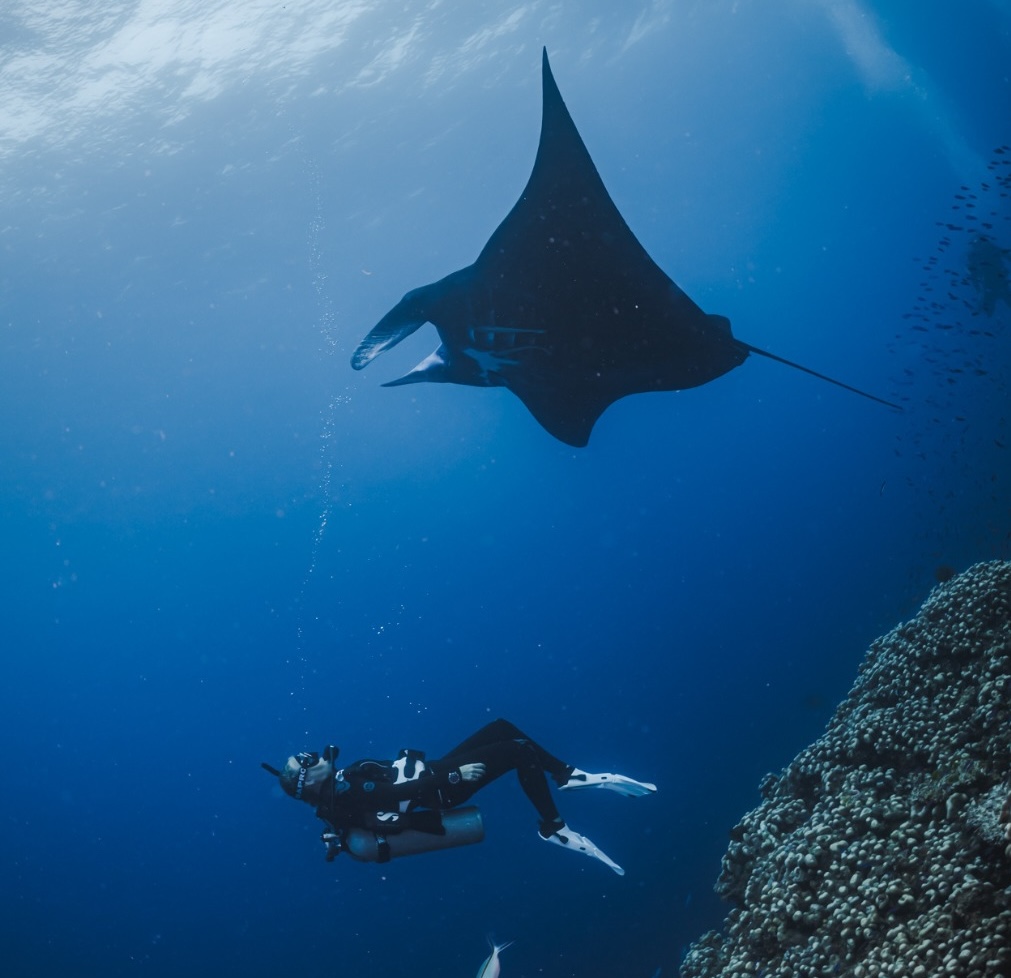
On the other hand, the wet season (December to May) has calmer waters and warmer temperatures (20-25°C or 68-77°F), and is known as "manta season." It's a great time to see hammerhead sharks and manta rays. Even though it's called the rainy season, there are usually only short but heavy rains each day. Divers often find they can enjoy the excitement of Galapagos dive sites with a short wetsuit during this time.
Top hotels in galapagos

.png)
.png)